Health Benefits of Walnuts: Nutrition, Uses and Buying Considerations
Walnuts are widely used in household diets, bakeries, food manufacturing and commercial food products. Their distinctive flavour, texture and nutrient profile make them a versatile ingredient for both direct consumption and food preparation.
People often associate walnuts with healthy eating because they contain plant-based fats, protein, fibre and several naturally occurring nutrients. However, walnuts should be understood as part of a balanced diet rather than as a treatment or guaranteed solution for any health condition.
For food buyers and businesses, product format also matters. In-shell walnuts, whole kernels and broken kernels can serve different commercial applications.
This guide explains the nutritional value, common uses and practical buying considerations associated with walnuts.
What Are Walnuts?
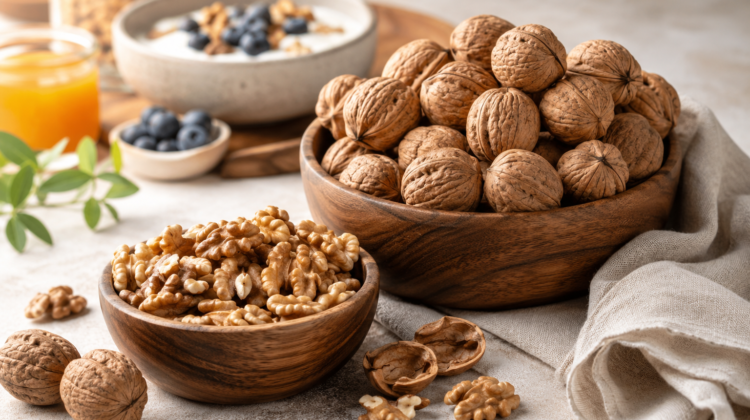
Walnuts are edible seeds produced by walnut trees. Their hard outer shell protects the kernel, which has a distinctive shape, flavour and texture.
Walnuts generally reach buyers in two main forms:
- In-shell walnuts
- Shelled walnut kernels
Walnut kernels may also be supplied in different sizes and conditions, including:
- Whole kernels
- Halves
- Quarters
- Broken pieces
- Smaller ingredient-grade pieces
Each format can suit a different application.
For example, visually attractive whole kernels may be useful for retail presentation or premium food products. Meanwhile, broken walnut pieces may work well in bakery, confectionery or manufacturing applications where the product will be chopped or mixed.
Nutritional Value of Walnuts
Walnuts contain several nutrients that support their role in a balanced diet.
They naturally provide:
- Plant-based fats
- Protein
- Dietary fibre
- Vitamins
- Minerals
- Naturally occurring antioxidants
Walnuts are also known for containing alpha-linolenic acid, which is a plant-based omega-3 fatty acid.
However, the exact nutritional values can vary according to serving size, product condition and preparation method.
Businesses producing nutritional labels or health-related packaging should use verified laboratory or approved supplier data rather than relying only on general online information.
Walnuts Provide Plant-Based Fats
A significant part of the energy in walnuts comes from fats.
These fats include unsaturated fatty acids, which differ from the saturated fats found in many other food products.
This nutrient profile makes walnuts a common ingredient in:
- Healthy snack products
- Breakfast mixes
- Granola
- Nut blends
- Bakery items
- Plant-based recipes
Nevertheless, walnuts remain energy-dense. Portion size still matters within an overall balanced eating pattern.
Protein and Fibre Content
Walnuts contain both plant-based protein and dietary fibre.
Protein contributes to the maintenance and repair of body tissues. Meanwhile, fibre supports normal digestive function and can contribute to a feeling of fullness.
For this reason, manufacturers may include walnuts in products designed for:
- Breakfast
- Snacking
- Bakery
- Cereals
- Trail mixes
- Plant-based foods
However, businesses should avoid making unsupported nutritional or medical claims.
Product descriptions should remain accurate and should follow the relevant labelling requirements of the destination market.
Walnuts and Heart-Conscious Diets
Walnuts often appear in heart-conscious food discussions because of their unsaturated fat content.
Replacing some foods high in saturated fat with suitable unsaturated-fat sources may support a more balanced dietary pattern.
However, this does not mean that walnuts can prevent or treat heart disease.
Any health-related statement used in commercial packaging or advertising should comply with the applicable food and advertising regulations.
A responsible description would focus on the actual nutrient content instead of promising a medical outcome.
Antioxidants and Naturally Occurring Nutrients
Walnuts contain naturally occurring compounds with antioxidant properties.
Antioxidants help protect cells from oxidative stress. However, the presence of antioxidants does not justify exaggerated health claims.
Businesses should explain walnut nutrition using clear and evidence-based language.
For example:
Walnuts contain naturally occurring nutrients and antioxidant compounds as part of their overall food composition.
This is more responsible than claiming that walnuts cure disease or guarantee a specific health result.
Common Culinary Uses of Walnuts
Walnuts support a wide range of commercial and household applications.
Direct Consumption
Walnut kernels can be eaten as a standalone snack or combined with other nuts and dry fruits.
Bakery Products
Bakeries commonly use walnuts in:
- Bread
- Cakes
- Cookies
- Brownies
- Muffins
- Pastries
Broken kernels or smaller pieces may work particularly well for these applications.
Breakfast Products
Walnuts can be added to:
- Oatmeal
- Granola
- Cereals
- Yogurt
- Smoothie bowls
Confectionery
Food manufacturers may use walnuts in:
- Chocolates
- Dessert fillings
- Nut bars
- Sweet products
- Premium gifting assortments
Savoury Recipes
Walnuts also work in:
- Salads
- Sauces
- Stuffings
- Plant-based dishes
- Garnishes
The correct product format depends on the final application.
In-Shell Walnuts and Walnut Kernels
Buyers should understand the difference between in-shell walnuts and walnut kernels.
In-Shell Walnuts
In-shell walnuts retain their natural outer shell.
They may suit:
- Traditional retail markets
- Consumer cracking
- Seasonal displays
- Wholesale distribution
- Certain gifting applications
The buyer may need to consider:
- Shell appearance
- Walnut size
- Product origin
- Kernel recovery expectations
- Packing format
Walnut Kernels
Walnut kernels have already been removed from the shell.
They may suit:
- Bakery production
- Food manufacturing
- Retail packing
- Confectionery
- Direct consumption
- Ingredient supply
Kernel buyers may need to discuss:
- Whole or broken format
- Size
- Colour
- Intended use
- Packing
- Quantity
Therefore, requesting only “walnuts” may not provide enough information for a commercial discussion.
Choosing the Right Walnut Format
The intended use should guide the format decision.
A retail brand may prefer whole, visually consistent kernels because presentation matters.
In contrast, a bakery may prefer halves, quarters or pieces because the product will enter a recipe.
A wholesale distributor may require in-shell walnuts for customers who prefer the natural shell format.
Before requesting a quotation, buyers should clarify:
- In-shell or kernel format
- Whole, half or broken kernels
- Intended use
- Approximate quantity
- Packing preference
- Destination market
- Required timing
These details help create a more relevant discussion.
Walnut Quality Considerations
Walnut quality cannot be judged through one characteristic alone.
Buyers may consider:
- Appearance
- Kernel colour
- Size
- Flavour
- Aroma
- Texture
- Product cleanliness
- Moisture condition
- Foreign-material control
- Packing condition
The importance of each characteristic depends on the intended application.
For example, a premium retail product may place greater emphasis on visual appearance. A manufacturing buyer may focus more on format consistency and operational suitability.
Formal commercial decisions should rely on agreed specifications and appropriate product checks.
Storage Considerations
Walnuts contain natural oils, so unsuitable storage can affect their flavour and condition.
Businesses should store walnuts in a:
- Clean environment
- Dry location
- Cool setting
- Area protected from direct sunlight
- Space away from strong odours
- Suitable food-storage system
Packaging should also protect the product from moisture, contamination and unnecessary exposure.
The exact storage instructions should reflect the product format, packaging and supplier guidance.
Buyers should also apply stock-rotation practices that match their operations.
Walnut Allergens
Walnuts are tree nuts and can cause allergic reactions in sensitive individuals.
Therefore, food businesses should handle allergen information carefully.
Manufacturers, packers and retailers may need to consider:
- Allergen declarations
- Cross-contact controls
- Production-area procedures
- Cleaning practices
- Packaging information
- Destination-market regulations
Businesses should not hide or minimise allergen information.
Accurate labelling protects consumers and supports responsible food operations.
Health Claims Require Care
A common problem in food content is the use of exaggerated health claims.
Statements such as “walnuts prevent disease” or “walnuts guarantee brain health” may be misleading and may not comply with relevant advertising or food-labelling rules.
A better approach is to describe:
- The nutrients walnuts contain
- How people commonly use them
- Their place within a balanced diet
- Their commercial food applications
Businesses should verify any formal nutrition or health claim before publishing it on product packaging, advertising or sales materials.
Walnuts in Commercial Food Products
Walnuts may add flavour, texture and visual appeal to many commercial products.
Examples include:
- Premium bakery ranges
- Healthy snack mixes
- Breakfast products
- Chocolate products
- Nut bars
- Restaurant dishes
- Gifting assortments
- Retail nut packs
However, product developers should consider more than flavour.
They should also evaluate:
- Product size
- Format consistency
- Allergen controls
- Shelf-life requirements
- Storage conditions
- Packaging
- Cost
- Customer expectations
The most suitable walnut format depends on the complete product concept.
Information Buyers Should Provide
A clear walnut inquiry should include:
Required Product
State whether you need in-shell walnuts or walnut kernels.
Format
Explain whether you need whole kernels, halves, quarters or pieces.
Intended Use
Clarify whether the product is for wholesale, retail, bakery, manufacturing or another application.
Approximate Quantity
Share an estimated bulk requirement or quantity range.
Packing Preference
Mention whether you need standard bulk packing, a particular pack size or a custom-packing discussion.
Destination
Include the country, market or port.
Required Timing
Explain when you expect to purchase, move or receive the product.
This information helps both sides move beyond a general price request.
Common Walnut Buying Mistakes
Buyers should avoid several common mistakes.
Requesting Only a General Walnut Price
The price may differ according to in-shell or kernel format, grade, size, quantity, packing and current commercial conditions.
Ignoring Intended Use
The best format for retail display may not suit manufacturing.
Treating All Kernels as Identical
Whole kernels, halves and broken pieces can support different applications.
Leaving Packing Until the End
Packing affects the wider commercial requirement and should enter the discussion early.
Ignoring Storage Needs
The buyer should prepare suitable storage before receiving the product.
Using Unsupported Health Claims
Commercial content should describe nutrition responsibly and comply with applicable rules.
How Maahir International Supports Walnut Discussions
Maahir International supports international B2B conversations involving walnuts, dates, almonds, pistachios, dry figs and selected food ingredients.
For walnut requirements, buyers should share:
- In-shell or kernel preference
- Required format
- Intended application
- Approximate volume
- Packing preference
- Destination
- Expected timing
This information helps structure a clearer discussion around product suitability and the next commercial step.
Start a Walnut Product Conversation
Walnuts offer nutritional value, culinary versatility and several commercial formats.
However, the correct buying decision depends on the intended use, required format, quantity, packing and destination.
Businesses interested in in-shell walnuts, whole kernels or walnut pieces can begin by preparing a clear requirement.