Delicious Almond Recipes, Food Uses and Buying Considerations
Almonds are among the most versatile nuts used in household cooking, bakeries, food manufacturing, hospitality and retail products. Their mild flavour, firm texture and range of available formats allow businesses and consumers to use them in both sweet and savoury recipes.
Whole almonds work well as snacks and product toppings. Sliced or chopped almonds can support bakery and breakfast applications. Meanwhile, processed almond formats may suit confectionery, sauces, spreads and food manufacturing.
However, the right almond product depends on the intended application. Buyers should consider format, size, appearance, quantity, packing and storage before making a commercial decision.
This guide explores practical almond recipes, common food uses and important buying considerations.
Why Almonds Are So Versatile
Almonds can be used in several forms.
Common commercial formats include:
- In-shell almonds
- Whole almond kernels
- Blanched almonds
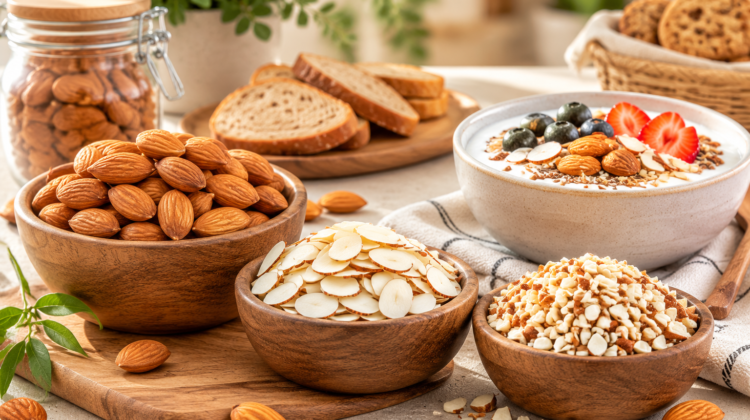
- Sliced almonds
- Slivered almonds
- Chopped almonds
- Almond pieces
- Ground almonds
- Almond flour
- Almond paste or processed ingredients
Each format performs a different role in food preparation.
For example, whole almonds provide texture and visual appeal. Sliced almonds work well as toppings, while ground almonds can become part of cake mixtures, desserts and other processed foods.
Therefore, buyers should select the format according to the final product rather than choosing only by appearance.
Nutritional Value of Almonds
Almonds naturally contain:
- Plant-based protein
- Dietary fibre
- Unsaturated fats
- Vitamin E
- Magnesium
- Other naturally occurring nutrients
These characteristics make almonds common ingredients in breakfast products, healthy snack mixes and plant-based foods.
However, almonds are also energy-dense. Portion size remains important within a balanced diet.
Businesses should avoid unsupported medical claims. Any formal nutrition statement used on packaging, advertising or product labels should follow the relevant regulations and verified nutritional data.
A responsible product description can explain what almonds contain without promising that they prevent or cure a health condition.
Whole Almonds as a Snack
Whole almonds require very little preparation and can form part of a simple snack.
They may be served:
- Plain
- Lightly roasted
- Alongside dates or dry fruits
- In mixed-nut products
- With yogurt
- In breakfast bowls
- As part of a hospitality platter
Businesses selling snack products may combine almonds with walnuts, pistachios, dried figs, raisins or dates.
However, the final mix should consider:
- Ingredient quality
- Allergen labelling
- Portion size
- Packing
- Shelf-life expectations
- Storage conditions
Whole almonds may also work well in retail jars, pouches and premium gifting assortments.
Simple Roasted Almonds
Roasting can change the flavour, aroma and texture of almonds.
A basic preparation may include:
- Spread whole almonds evenly on a clean baking tray.
- Roast them at a moderate temperature.
- Stir or turn them during roasting.
- Remove them when they become aromatic and lightly coloured.
- Allow them to cool before packing or serving.
Businesses should use a validated production method rather than relying only on a household recipe.
Commercial roasting requires control over:
- Temperature
- Time
- Batch consistency
- Food safety
- Seasoning
- Cooling
- Packaging
- Allergen management
Over-roasting can create an undesirable flavour, while inconsistent heating can affect product quality.
Almond and Date Snack Bites
Almonds and dates can be combined in simple snack products.
A household-style recipe may use:
- Pitted dates
- Whole or chopped almonds
- Oats
- Coconut
- Cocoa
- Seeds
- A small amount of flavouring
The ingredients can be blended and shaped into small portions.
For commercial production, businesses should also consider:
- Ingredient ratios
- Texture consistency
- Moisture
- Shelf life
- Packaging
- Nutritional labelling
- Allergen declarations
The natural sweetness of dates can complement the texture of almonds. However, product developers should test the complete formulation before commercial sale.
Almond Breakfast Bowl
Almonds can add texture to breakfast foods.
A simple bowl may include:
- Yogurt or a plant-based alternative
- Oats or granola
- Fresh fruit
- Dates or dry figs
- Whole, sliced or chopped almonds
Sliced almonds work particularly well as a topping because they spread evenly across the product.
Foodservice and hospitality businesses may also use almonds in:
- Breakfast buffets
- Yogurt cups
- Granola servings
- Smoothie bowls
- Porridge
- Fruit platters
The business should select an almond format that supports presentation, portion control and ease of service.
Almonds in Bakery Products
Bakeries use almonds in many products.
Common applications include:
- Cakes
- Cookies
- Muffins
- Pastries
- Bread
- Tarts
- Biscotti
- Croissants
- Dessert fillings
Different formats perform different functions.
Whole Almonds
Whole almonds can decorate cakes, biscuits and premium bakery products.
Sliced Almonds
Sliced almonds often appear on pastries, cakes and bread. They create visual texture without adding large pieces.
Chopped Almonds
Chopped almonds can enter cookie dough, cake mixtures and fillings.
Ground Almonds
Ground almonds can support cake bases, biscuits and gluten-conscious formulations, although businesses must verify the complete recipe before making any dietary claim.
Almond Paste
Processed almond paste may be used in confectionery and bakery fillings.
A bakery buyer should therefore explain the exact product application before requesting a quotation.
Almond Cookies
A basic almond cookie may include:
- Flour
- Butter or another suitable fat
- Sugar
- Egg or an alternative binder
- Chopped or ground almonds
- Flavouring
The dough is portioned and baked until properly cooked.
However, a commercial bakery must standardise:
- Ingredient measurements
- Mixing process
- Portion size
- Baking temperature
- Baking time
- Cooling
- Packing
- Shelf-life testing
The almond format also affects the finished texture.
Ground almonds can blend into the dough, while chopped almonds create more noticeable pieces.
Almond Cake and Dessert Uses
Almonds can support several dessert applications.
These include:
- Almond cakes
- Tarts
- Puddings
- Chocolate products
- Ice cream toppings
- Dessert fillings
- Confectionery
- Premium gifting products
Whole or sliced almonds often provide visual appeal. Meanwhile, ground or processed almonds may form part of the internal recipe.
Dessert manufacturers should consider whether the almond needs to remain visible or become part of the product structure.
This decision can influence the required grade, size and format.
Almonds in Savoury Food
Almonds are not limited to sweet recipes.
They may also appear in:
- Salads
- Rice dishes
- Stuffing
- Sauces
- Vegetable dishes
- Grain bowls
- Meat or plant-based dishes
- Garnishes
Sliced or slivered almonds can add texture to salads and rice dishes.
Ground almonds may also become part of certain sauces and coatings.
Restaurants and foodservice businesses should choose formats that support quick preparation, portion consistency and presentation.
Almond-Crusted Food Products
Chopped or ground almonds can form part of a coating for selected food products.
A basic preparation may involve:
- Preparing the selected food item.
- Applying a suitable binder.
- Coating the surface with chopped or ground almonds.
- Cooking the item using an appropriate method.
- Confirming that the final product reaches a safe internal condition.
Commercial kitchens must follow their own food-safety controls and validated cooking procedures.
The almond pieces should also have a suitable size. Large pieces may not adhere evenly, while very fine material may create a different texture.
Almonds in Food Manufacturing
Food manufacturers may use almonds in:
- Snack bars
- Cereals
- Granola
- Chocolate
- Bakery fillings
- Nut spreads
- Plant-based foods
- Breakfast products
- Confectionery
- Premium dessert products
Manufacturing buyers often require more detailed specifications than household consumers.
They may need to confirm:
- Format
- Size
- Moisture condition
- Appearance
- Batch consistency
- Allergen documentation
- Packing
- Product handling
- Quantity
- Supply frequency
The lowest-priced format may not always be the most suitable.
A product that creates excessive breakage, inconsistent texture or poor visual presentation may increase operational problems.
Whole, Sliced or Chopped Almonds?
The intended use should determine the format.
Whole Almonds
Suitable for:
- Direct consumption
- Retail packs
- Nut mixes
- Hospitality platters
- Premium gifting
- Product decoration
Sliced Almonds
Suitable for:
- Bakery toppings
- Breakfast bowls
- Salads
- Dessert presentation
- Foodservice garnishes
Slivered Almonds
Suitable for:
- Rice dishes
- Bakery
- Confectionery
- Premium toppings
- Savoury applications
Chopped Almonds
Suitable for:
- Cookies
- Snack bars
- Granola
- Chocolate products
- Cake mixtures
- Food manufacturing
Ground Almonds
Suitable for:
- Cakes
- Biscuits
- Dessert bases
- Fillings
- Selected processed-food applications
Buyers should discuss how the final product will use the almonds before selecting a format.
Blanched and Natural Almonds
Natural almonds retain their brown outer skin.
Blanched almonds have had this skin removed through a processing step.
Both formats can support different applications.
Natural Almonds
They may suit:
- Direct consumption
- Nut mixes
- Roasting
- Retail packing
- Products where the natural appearance is acceptable
Blanched Almonds
They may suit:
- Light-coloured bakery products
- Confectionery
- Sliced or slivered formats
- Decorative food applications
- Products requiring a smoother visual appearance
The buyer should not assume that one format is universally better.
The correct choice depends on visual expectations, flavour, texture, processing and final application.
Almond Size and Appearance
Almonds may differ in size, shape, colour and surface condition.
For premium retail products, appearance may be especially important.
For manufacturing, the buyer may focus more on:
- Format consistency
- Operational performance
- Breakage level
- Processing suitability
- Flavour
- Cleanliness
Therefore, the same almond may not suit every buyer.
A clear specification should explain which characteristics matter most.
Packing Considerations
Packing should protect almonds from:
- Moisture
- Contamination
- Unnecessary exposure
- Strong external odours
- Physical damage
- Unsuitable storage conditions
Commercial packing options may include:
- Bulk bags
- Cartons
- Foodservice packs
- Retail pouches
- Jars
- Custom packaging
- Private-label formats
The correct option depends on quantity, destination, intended use and distribution method.
Buyers should introduce packing requirements early in the commercial discussion.
Storage of Almonds
Almonds contain natural oils and require suitable storage.
Businesses should keep them in a:
- Clean environment
- Cool location
- Dry area
- Place protected from direct sunlight
- Space away from strong odours
- Proper food-storage system
The exact storage guidance should reflect:
- Product format
- Packaging
- Supplier instructions
- Local environmental conditions
- Planned storage period
Businesses should also use appropriate stock rotation.
Poor storage may affect flavour, aroma, texture and overall product condition.
Almond Allergens
Almonds are tree nuts and may cause allergic reactions in sensitive individuals.
Food businesses should manage this issue carefully.
Important considerations include:
- Allergen declarations
- Cross-contact prevention
- Production-area controls
- Cleaning procedures
- Staff training
- Packaging information
- Destination-market rules
Businesses should not describe almond products as allergen-free unless they have appropriate evidence and controls.
Clear allergen communication protects consumers and supports responsible business practice.
Nutrition and Health Claims
Businesses should use careful wording when describing almonds.
It is reasonable to discuss their natural nutrient content and common role in balanced diets.
However, statements claiming that almonds cure disease, guarantee weight loss or produce a specific medical result may be misleading.
Responsible commercial content should focus on:
- Nutrient profile
- Food applications
- Serving context
- Product format
- Intended use
Formal nutrition and health claims should use verified evidence and comply with the rules of the destination market.
Buying Almonds for Retail
Retail buyers may prioritise:
- Appearance
- Size consistency
- Pack presentation
- Product cleanliness
- Customer preferences
- Shelf positioning
- Pack size
- Branding potential
Whole natural or blanched almonds may work well in retail packs.
However, the buyer should consider the target customer and product positioning.
A value-focused product may require different specifications from a premium gifting range.
Buying Almonds for Manufacturing
Manufacturing buyers may focus more on:
- Format
- Batch consistency
- Processing performance
- Ingredient functionality
- Moisture condition
- Breakage
- Packing efficiency
- Supply planning
For example, a bakery may prefer chopped almonds because the recipe does not require whole kernels.
A snack-bar manufacturer may require a controlled piece size to support consistent production.
Therefore, the buyer should share the processing application during the initial discussion.
Information Almond Buyers Should Provide
A useful almond inquiry should include:
Product Format
State whether you require whole, blanched, sliced, slivered, chopped or ground almonds.
Intended Use
Explain whether the almonds are for retail, bakery, manufacturing, hospitality or another application.
Approximate Quantity
Provide an estimated bulk volume or range.
Grade or Size
Share known expectations or explain where guidance is needed.
Packing Requirement
State whether you require standard bulk packing, specific pack sizes or custom packaging.
Destination
Include the country, market or port.
Required Timing
Explain when you expect to purchase or receive the product.
This information allows the supplier to respond more accurately.
Common Almond Buying Mistakes
Buyers should avoid several common mistakes.
Requesting Only an Almond Price
Different formats, sizes, grades and packing requirements may create different commercial discussions.
Selecting a Format Without Considering the Recipe
Whole almonds may not be suitable when the application requires a consistent chopped ingredient.
Ignoring Allergen Requirements
Tree-nut allergen communication remains essential.
Leaving Packing Until the Final Stage
Packing affects preparation and should be discussed early.
Focusing Only on Appearance
Manufacturing suitability, texture and consistency may be equally important.
Using Unsupported Health Claims
Commercial content should remain factual and compliant.
How Maahir International Supports Almond Inquiries
Maahir International supports B2B discussions involving almonds, walnuts, pistachios, dates, dry figs and selected food ingredients.
For almond requirements, buyers should share:
- Required format
- Grade or size
- Intended application
- Approximate quantity
- Packing preference
- Destination
- Expected timeline
This information helps create a clearer discussion around product suitability and the next commercial step.
Start an Almond Product Conversation
Almonds can support snacks, breakfast products, bakery, confectionery, food manufacturing and savoury dishes.
However, whole, sliced, chopped, blanched and ground almonds serve different purposes.
Businesses should select the format according to the intended application, operational needs, packing requirements and target market.
Share your almond requirement, format, quantity, packing preference, destination and expected timing with Maahir International.