In-Shell Walnuts vs Walnut Kernels: A Buyer’s Guide
Walnuts generally reach commercial buyers in two main formats: in-shell walnuts and shelled walnut kernels.
Both products come from the same nut, but they create different handling, processing, packing and buying requirements.
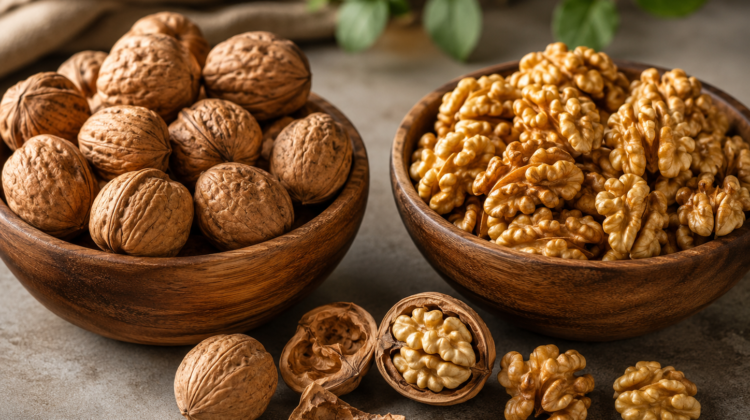
In-shell walnuts retain their natural outer shell. Walnut kernels have already been removed from the shell and may be supplied as whole kernels, halves, quarters or smaller pieces.
The right option depends on how the buyer plans to process, pack, distribute or use the product.
A wholesale distributor may require in-shell walnuts for traditional retail markets. Meanwhile, a bakery, confectionery business or food manufacturer may prefer walnut kernels because they can enter production without an additional shell-removal stage.
This guide compares in-shell walnuts and walnut kernels and explains the information buyers should consider before beginning a commercial discussion.
What Are In-Shell Walnuts?
In-shell walnuts are supplied with their natural hard outer shell still intact.
The shell protects the edible kernel inside and gives the product its traditional whole-nut appearance.
In-shell walnuts may be used for:
- Wholesale distribution
- Traditional retail markets
- Consumer cracking
- Seasonal displays
- Hospitality
- Gifting
- Mixed-nut assortments
- Repacking and resale
Buyers may evaluate in-shell walnuts according to:
- Shell size
- Shell colour
- External appearance
- Shell cleanliness
- Cracking characteristics
- Internal kernel condition
- Kernel colour
- Product origin
- Packing
- Intended use
However, external appearance alone does not show every aspect of the kernel inside.
Therefore, commercial buyers may require sampling, cracking tests or agreed product specifications before confirming suitability.
What Are Walnut Kernels?
Walnut kernels are the edible part of the walnut after the shell has been removed.
They may be supplied in several forms, including:
- Whole kernels
- Kernel halves
- Quarters
- Large pieces
- Small pieces
- Broken kernels
- Ingredient-grade pieces
Walnut kernels may suit:
- Direct consumption
- Retail packing
- Bakery production
- Confectionery
- Food manufacturing
- Snack mixes
- Breakfast products
- Hospitality
- Ingredient supply
Because the shell has already been removed, buyers can inspect the kernel format and appearance more directly.
However, exposed kernels also require careful handling and suitable packaging because they are more vulnerable to physical damage, moisture, external odours and unsuitable storage conditions.
The Main Difference Between Both Formats
The most obvious difference is the shell.
However, this difference affects several commercial areas.
In-shell walnuts involve:
- Shell weight
- Buyer-side cracking
- Kernel extraction
- Shell disposal
- Internal quality assessment
- Traditional whole-nut presentation
Walnut kernels involve:
- Immediate edible-product access
- More visible grading
- Easier production use
- Greater exposure
- More careful packing
- Potential breakage during handling
Therefore, buyers should not compare both products only by the price per kilogram.
The comparison should also consider how much preparation, labour, packing and processing each format requires.
Intended Use Should Guide the Decision
The intended use is one of the most important factors.
A buyer should first ask:
What will happen to the walnuts after purchase?
The answer may immediately indicate which format is more suitable.
In-Shell Walnuts May Suit
- Traditional retail customers
- Consumer cracking
- Wholesale produce markets
- Seasonal nut displays
- Gifting assortments
- Businesses with cracking facilities
- Markets where in-shell nuts are preferred
Walnut Kernels May Suit
- Bakeries
- Food manufacturers
- Confectionery businesses
- Retail kernel packs
- Snack producers
- Restaurants
- Hotels
- Ingredient distributors
A business that requires ready-to-use walnut pieces may gain little value from buying the product in shell unless it has suitable cracking and sorting capacity.
Similarly, a retailer serving consumers who prefer whole natural walnuts may not need pre-shelled kernels.
In-Shell Walnuts for Retail Markets
In-shell walnuts can create a traditional and natural product presentation.
Retail customers may associate the shell with:
- Freshness
- Natural form
- Consumer cracking
- Seasonal purchasing
- Traditional household use
However, retailers should consider:
- Shell cleanliness
- Product size
- Visual consistency
- Packaging
- Customer expectations
- Product handling
- Storage
- Internal kernel condition
A visually attractive shell does not automatically guarantee that every kernel will meet the buyer’s required specification.
Therefore, retailers should rely on agreed commercial standards rather than appearance alone.
Walnut Kernels for Retail Packing
Walnut kernels can be packed into pouches, trays, jars or other retail formats.
Retail kernel buyers may focus on:
- Kernel colour
- Kernel size
- Whole or broken format
- Visual consistency
- Product cleanliness
- Packing presentation
- Shelf-life information
- Consumer preferences
Whole kernels or halves may suit premium retail products because they create stronger visual presentation.
Broken pieces may suit value-focused packs or applications where perfect kernel shape is not essential.
The buyer should define the intended market position before selecting the format.
Walnut Kernels for Bakery Applications
Bakeries often use walnut kernels because they can enter production without shell removal.
Common applications include:
- Cakes
- Cookies
- Brownies
- Bread
- Muffins
- Pastries
- Dessert fillings
- Toppings
The ideal kernel format depends on the recipe.
Whole or Half Kernels
These may suit:
- Decorative toppings
- Premium pastries
- Visible product presentation
- Selected dessert products
Quarters and Pieces
These may suit:
- Cake mixtures
- Cookie dough
- Brownies
- Bread
- Fillings
Smaller Pieces
These may suit:
- Ingredient blending
- Mass bakery production
- Products where even distribution matters
A bakery should avoid paying for perfect whole kernels when the production process will immediately chop them.
Instead, the buyer should choose a format that matches the final recipe and operational requirement.
Walnut Kernels for Food Manufacturing
Food manufacturers may use walnut kernels in:
- Snack bars
- Granola
- Breakfast cereals
- Chocolate products
- Nut mixes
- Bakery fillings
- Confectionery
- Processed foods
Manufacturing buyers may require information about:
- Piece size
- Format consistency
- Product condition
- Moisture
- Flavour
- Batch uniformity
- Breakage
- Packing
- Traceability
- Supply frequency
A controlled piece-size range may be more important than whole-kernel appearance.
For example, a snack-bar manufacturer may need pieces that distribute evenly through the product.
Therefore, manufacturers should provide clear production requirements rather than requesting a general walnut-kernel quotation.
Kernel Recovery and Edible Product
When buying in-shell walnuts, part of the total weight consists of shell rather than edible kernel.
The amount of edible kernel recovered can vary according to:
- Walnut variety
- Size
- Shell thickness
- Internal development
- Product condition
- Cracking method
- Sorting process
Therefore, buyers should not assume that every kilogram of in-shell walnuts produces the same amount of usable kernel.
Businesses with cracking operations may evaluate:
- Expected kernel recovery
- Whole-kernel recovery
- Breakage
- Shell waste
- Labour
- Equipment efficiency
- Sorting requirements
This information helps them compare the real operational value of in-shell walnuts against ready-shelled kernels.
However, recovery expectations should come from transaction-specific product information, sampling or agreed specifications rather than a universal assumption.
Buyer-Side Processing Requirements
In-shell walnut buyers may need additional facilities and labour.
These can include:
- Cracking equipment
- Manual or automated sorting
- Shell separation
- Kernel inspection
- Foreign-material control
- Waste handling
- Packing
- Product storage
The business should calculate whether it can manage these stages efficiently.
For small retailers or manufacturers, buying kernels may reduce operational complexity.
For larger businesses with suitable processing systems, in-shell purchases may support a different commercial model.
The decision should consider total operating requirements rather than only the initial purchase price.
Appearance and Grading of In-Shell Walnuts
In-shell walnuts may be evaluated according to external characteristics such as:
- Shell size
- Shell shape
- Shell colour
- Surface cleanliness
- Physical damage
- Cracks
- Staining
- Uniformity
The required appearance depends on the final market.
Premium retail buyers may require stronger shell uniformity.
Processing buyers may place more importance on the internal kernel and cracking performance.
However, buyers should not evaluate shell appearance separately from internal product condition.
Where appropriate, sampling and cracking checks can provide a better understanding of the product.
Appearance and Grading of Walnut Kernels
Walnut kernels may be evaluated according to:
- Whole or broken format
- Size
- Colour
- Uniformity
- Physical condition
- Cleanliness
- Flavour
- Aroma
- Texture
- Moisture condition
Kernel colour may matter for certain retail or premium applications.
However, the buyer should not assume that colour alone defines the entire product quality.
A food manufacturer may accept a different colour range when operational suitability, flavour and piece size matter more than visual presentation.
The required specification should match the final application.
Whole Kernels, Halves and Pieces
Walnut kernels may break naturally during cracking, sorting, handling and transportation.
Different breakage levels can create different commercial formats.
Whole Kernels
Whole kernels may offer premium visual appeal but may be more difficult to maintain through handling and transport.
Kernel Halves
Halves are common in retail, bakery decoration and premium food products.
Quarters
Quarters may work well in bakery, confectionery and food production.
Smaller Pieces
Smaller pieces may suit mixing, fillings, bars and manufacturing applications.
Buyers should not automatically treat smaller pieces as unsuitable.
When the final application requires chopping or blending, smaller pieces may be commercially efficient.
Product Colour
Walnut kernels can show natural colour variation.
Buyers may encounter:
- Light-coloured kernels
- Medium-coloured kernels
- Darker kernels
- Mixed colour ranges
Colour can be influenced by variety, origin, processing, storage and product condition.
Premium retail buyers may prefer a narrower colour range.
Manufacturing buyers may have more flexibility when the kernel will enter a processed product.
However, unusual colour or condition should still receive appropriate product inspection.
The commercial specification should define the acceptable range for the intended use.
Flavour and Aroma
Walnuts contain natural oils that contribute to their characteristic flavour.
Unsuitable storage, excessive heat, moisture or prolonged exposure can affect flavour and aroma.
Buyers should evaluate whether the product has:
- A normal walnut flavour
- A suitable aroma
- No undesirable external odour
- No unusual stale or rancid characteristics
- Appropriate texture
Sensory evaluation may form part of product approval.
However, businesses should also follow suitable food-safety and quality-control procedures rather than relying only on taste.
Packing In-Shell Walnuts
In-shell walnuts may be packed in:
- Bags
- Sacks
- Cartons
- Bulk containers
- Retail packs
- Custom packaging
Packing should protect the product from:
- Contamination
- Moisture
- Physical damage
- Pest exposure
- Strong odours
- Unsuitable handling
The shell provides physical protection to the kernel, but it does not eliminate the need for suitable commercial packaging.
Buyers should confirm:
- Net weight
- Pack type
- Inner liner, where relevant
- Lot identification
- Handling instructions
- Destination requirements
Packing Walnut Kernels
Walnut kernels require protective packing because the edible product is exposed.
Packing may include:
- Food-grade inner bags
- Lined cartons
- Sealed bulk packs
- Foodservice packs
- Retail pouches
- Jars
- Trays
- Custom packaging
The packing system should help protect kernels from:
- Moisture
- Oxygen exposure
- Physical breakage
- External odours
- Contamination
- Unnecessary light
- Unsuitable temperature conditions
The correct packing depends on product format, volume, destination, distribution and storage plans.
Buyers should discuss packing early rather than treating it as a final detail.
Transport and Space Considerations
In-shell walnuts include shell weight and volume.
Therefore, they may require more storage and transport space relative to the edible kernel content.
Walnut kernels remove the shell before shipment, which can change:
- Pack density
- Transport efficiency
- Storage requirements
- Handling
- Product protection needs
However, kernels may also require more protective packaging because they are exposed and can break more easily.
The buyer should therefore compare:
- Purchase basis
- Edible product requirement
- Transport volume
- Packing
- Breakage risk
- Processing cost
- Storage capacity
A lower unit price may not represent the lowest total operational cost.
Storage Requirements
Both in-shell walnuts and kernels require suitable storage.
Businesses should generally store walnuts in a:
- Clean environment
- Cool area
- Dry location
- Space protected from direct sunlight
- Facility protected from pests
- Area away from chemicals and strong odours
- Suitable food-storage system
However, kernels may require closer protection because the shell no longer covers the edible product.
The exact storage instructions should follow:
- Supplier guidance
- Product format
- Packaging
- Planned storage period
- Local environmental conditions
Businesses should also apply suitable stock rotation and regular condition checks.
Shelf-Life Considerations
Shelf life can depend on:
- Product format
- Moisture
- Processing
- Packing
- Storage temperature
- Exposure
- Handling
- Opening of the original pack
Buyers should request product-specific shelf-life information.
They should not apply one general shelf-life period to every walnut product.
Repacking can also change product exposure and storage performance.
Retailers and manufacturers should therefore assess how their own handling process affects the final product.
Food Safety and Product Verification
Walnuts are food products and require responsible controls.
Commercial buyers may need to consider:
- Product specification
- Traceability
- Foreign-material control
- Pest control
- Microbiological requirements
- Chemical or residue requirements
- Moisture
- Packing integrity
- Storage
- Relevant testing
- Destination regulations
The required documentation can vary by product, buyer, use and destination.
Buyers should communicate their compliance requirements before finalising the order.
A general product name or photograph does not replace formal verification.
Allergen Requirements
Walnuts are tree nuts and can cause serious allergic reactions in sensitive individuals.
Food businesses must manage allergen information carefully.
Relevant considerations may include:
- Product labelling
- Cross-contact controls
- Supplier declarations
- Production procedures
- Storage separation
- Cleaning
- Staff training
- Destination-market requirements
Manufacturers using walnut kernels should clearly include walnuts in their allergen-management system.
Retailers repacking walnuts should also provide appropriate consumer information.
Businesses should not make allergen-free claims without suitable evidence and controls.
Comparing Price Correctly
In-shell walnut and walnut-kernel prices should not be compared as though both products provide the same commercial output.
An in-shell purchase includes:
- Shell weight
- Cracking
- Sorting
- Kernel extraction
- Labour
- Waste
- Breakage
- Processing time
A kernel purchase may include:
- Higher processing input before sale
- Protective packing
- More visible grading
- Ready-to-use edible product
- Potential breakage during transport
Therefore, the buyer should compare the total commercial requirement.
Useful questions include:
- How much edible kernel does the business need?
- Can the business crack walnuts efficiently?
- What labour and equipment are required?
- Which kernel format does production need?
- How much breakage is acceptable?
- What packing and storage apply?
- Which option produces the best operational fit?
The lowest purchase price may not always create the lowest total cost.
Documentation Buyers May Require
Depending on the transaction, buyers may request:
- Product specification
- Country-of-origin information
- Packing details
- Batch or lot identification
- Ingredient declaration
- Allergen declaration
- Relevant test reports
- Certificate of analysis
- Food-safety documentation
- Traceability information
- Commercial documents
The exact documentation depends on the buyer, destination and intended use.
Buyers should provide their documentary requirements early.
This gives the supplier time to confirm what is available and relevant to the product.
When In-Shell Walnuts May Be the Better Choice
In-shell walnuts may be suitable when:
- Consumers prefer cracking walnuts themselves
- Traditional retail demand exists
- The buyer has cracking and sorting facilities
- Whole-shell presentation matters
- The business serves wholesale produce markets
- Shell waste can be managed responsibly
- The buyer understands expected kernel recovery
However, the business should still confirm internal quality, product condition and commercial specifications.
When Walnut Kernels May Be the Better Choice
Walnut kernels may be suitable when:
- The product needs to enter food production directly
- The buyer lacks cracking facilities
- Kernel appearance matters
- Specific piece sizes are required
- Retail kernel packing is planned
- Faster preparation is important
- The buyer wants to inspect the edible product more directly
However, kernels still need suitable handling, packing and storage.
The absence of the shell increases convenience but also increases exposure.
Questions In-Shell Walnut Buyers Should Ask
Buyers considering in-shell walnuts may ask:
- What size range applies?
- Which origin is available?
- What shell appearance should we expect?
- What internal product information is available?
- Can samples be evaluated?
- What packing basis applies?
- What is the approximate commercial quantity?
- Which documents are available?
- What storage guidance applies?
- What is the current buying timeline?
Businesses that plan to extract kernels should also discuss expected processing performance through appropriate product evaluation.
Questions Walnut-Kernel Buyers Should Ask
Kernel buyers may ask:
- Do we need whole kernels, halves, quarters or pieces?
- Which colour range applies?
- What size or piece specification is available?
- What packing protects the kernels?
- Which quantity basis applies?
- What shelf-life information is available?
- What allergen information is provided?
- Which documents accompany the product?
- Which destination requirements need confirmation?
- What is the expected commercial timeline?
These questions help the supplier understand the complete requirement.
How to Prepare an In-Shell Walnut Inquiry
A useful inquiry may include:
We require in-shell walnuts for wholesale retail distribution. Please advise on the available origin, size range, packing format and product specification for an approximate bulk quantity to our destination.This is more useful than:
Send walnut price.The first inquiry provides product format, intended use, approximate scale and destination context.
How to Prepare a Walnut-Kernel Inquiry
A useful kernel inquiry may say:
We require walnut kernel halves and pieces for bakery production. Please advise on available format, colour range, bulk packing and commercial terms for our approximate quantity and destination.This inquiry explains:
- Kernel format
- Intended use
- Packing context
- Quantity basis
- Destination
As a result, the supplier can respond more accurately.
Common Buying Mistakes
Buyers should avoid several common mistakes.
Comparing Only Price per Kilogram
In-shell walnuts include shell weight and buyer-side processing.
Requesting “Walnuts” Without a Format
The supplier needs to know whether the buyer requires in-shell walnuts or kernels.
Ignoring the Final Application
Retail, bakery, manufacturing and wholesale buyers may need different formats.
Assuming Shell Appearance Guarantees Kernel Quality
Internal product condition requires appropriate evaluation.
Paying for Whole Kernels That Will Be Chopped
Smaller pieces may suit manufacturing more efficiently.
Ignoring Packing Differences
Kernels need stronger protection from exposure and breakage.
Forgetting Allergen Controls
Walnuts require proper allergen declarations and handling.
Leaving Destination and Timing Unclear
These details form part of the wider commercial requirement.
How Maahir International Supports Walnut Inquiries
Maahir International supports international B2B discussions involving walnuts, almonds, pistachios, dates, dry figs and selected food ingredients.
For walnut inquiries, buyers should share:
- In-shell or kernel format
- Required kernel size or piece type
- Intended use
- Approximate quantity
- Packing preference
- Destination
- Required documentation
- Expected timing
This information helps structure a clearer product discussion and identify the next commercial step.
Choose the Format That Fits the Business
In-shell walnuts and walnut kernels can both support valuable commercial applications.
In-shell walnuts may suit traditional retail, consumer cracking and businesses with processing capacity.
Walnut kernels may suit bakery, manufacturing, retail packing and businesses that require a ready-to-use edible product.
Neither format is universally better.
The correct choice depends on:
- Intended application
- Processing capability
- Required kernel format
- Product presentation
- Labour
- Packing
- Storage
- Transport
- Destination
- Commercial timing
Businesses should compare the total operational requirement instead of focusing only on the initial product price.
Start a Walnut Buying Conversation
Businesses interested in in-shell walnuts, walnut kernel halves, quarters or pieces can begin by preparing a clear commercial requirement.
Share the required format, intended use, approximate quantity, packing preference, destination and expected timing with Maahir International.