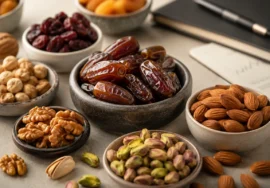

Understanding Seasonality in Nuts, Dates and Dry Fruit Trade
Seasonality plays an important role in the international trade of nuts, dates and dry fruits. These products begin as agricultural crops, so their commercial journey connects with growing cycles, harvesting, processing, grading, storage and changing buyer demand.
However, seasonality does not mean that every product follows one fixed calendar. Timing can differ according to origin, variety, weather conditions, product format, processing requirements and current market activity.
For this reason, buyers should not ask only whether a product is “in season.” A stronger sourcing conversation should also explain the required product, intended use, approximate volume, packing preference, destination and expected buying timeline.
At Maahir International, we encourage buyers to treat seasonality as part of a wider commercial discussion rather than as a guarantee of price, quality or immediate availability.
What Seasonality Means in Food Trade
Seasonality describes how agricultural production and commercial activity change during different periods of the year.
Before a product becomes ready for international trade, it may pass through several stages:
- Growing
- Harvesting
- Initial handling
- Drying or processing
- Sorting
- Grading
- Packing
- Storage
- Commercial distribution
Each stage can influence when a particular product format becomes available for discussion.
For example, the agricultural harvest may take place before the product completes processing, grading or packing. Therefore, harvest timing and commercial readiness are connected, but they are not always identical.
A useful seasonal discussion should consider:
- Product category
- Product origin
- Crop context
- Required format
- Grade or size
- Processing stage
- Packing requirement
- Destination
- Buying timeline
Together, these details create a clearer understanding of the buyer’s requirement.
Why Seasonality Matters to Buyers
Seasonality can affect several parts of a sourcing conversation.
It may influence:
- Product availability
- Origin options
- Format discussions
- Quality expectations
- Processing timelines
- Packing preparation
- Demand pressure
- Purchasing schedules
However, buyers should avoid making automatic assumptions.
A product connected with a recent harvest is not automatically the correct specification for every buyer. Similarly, a product outside its main harvest period is not automatically unavailable or commercially unsuitable.
The buyer still needs to evaluate the complete requirement.
Seasonality provides useful market context, but the product specification determines whether an offer fits the buyer’s actual need.
Seasonality Can Differ by Origin
The same product category may come from several producing regions.
Different origins may have different:
- Climate conditions
- Growing cycles
- Harvest periods
- Product varieties
- Processing practices
- Commercial timelines
Therefore, one general statement about “walnut season” or “date season” may not apply equally to every origin.
Buyers should ask which origins are relevant to the current discussion.
They should also explain whether they have a fixed origin preference or whether they are open to suitable alternatives.
Origin flexibility may create a broader sourcing conversation. However, buyers should compare products according to specification, intended use and commercial suitability rather than selecting an origin only because of timing.
Walnuts and Seasonal Planning
Walnut requirements may involve several commercial formats.
These can include:
- In-shell walnuts
- Walnut kernels
- Whole kernels
- Broken kernels
- Different colour expectations
- Different size ranges
- Retail use
- Bakery or ingredient use
The commercial timeline for in-shell walnuts may differ from the timeline for processed kernels because kernels require additional handling and preparation.
A buyer should therefore explain:
- Whether in-shell walnuts or kernels are required
- Preferred size or grade
- Intended application
- Approximate quantity
- Packing preference
- Destination
- Expected timing
This information connects the seasonal discussion with the actual buying requirement.
For example, a food manufacturer may require walnut kernels in a specific format. Meanwhile, a distributor may require in-shell walnuts for a different customer group.
Both buyers are sourcing walnuts, but their commercial needs are not identical.
Dates and Seasonal Planning
Dates include different varieties, sizes, textures, moisture levels and commercial formats.
A date buyer may require products for:
- Direct consumption
- Retail packing
- Hospitality
- Gifting
- Food processing
- Ingredient applications
The discussion may also cover:
- Whole or pitted format
- Texture
- Moisture
- Size
- Variety
- Presentation
- Packing style
Seasonality can influence the context around these points. However, storage and processing may support commercial availability beyond the immediate harvest period.
Therefore, buyers should not rely only on a general crop calendar.
Instead, they should ask about the current product, specification and commercial readiness.
A buyer preparing dates for a gifting campaign may also need to begin earlier because presentation, custom packing and distribution can add preparation time.
Almonds and Product Format
Almonds can reach buyers in several formats, including:
- In-shell almonds
- Whole almond kernels
- Blanched almonds
- Sliced almonds
- Chopped almonds
- Processed ingredient formats
The commercial timeline may differ between a standard whole product and a processed format.
For example, a buyer requesting whole almonds in standard bulk packing may have a simpler preparation requirement than a buyer requesting sliced almonds in a specific retail pack.
Therefore, product format should enter the seasonal discussion from the beginning.
The buyer should explain:
- Intended application
- Required format
- Grade or size
- Approximate quantity
- Packing requirement
- Destination
- Required buying window
Without this information, a general question about almond availability may not produce a useful commercial answer.
Pistachios and Commercial Timing
Pistachio requirements may involve:
- In-shell pistachios
- Pistachio kernels
- Different size ranges
- Retail applications
- Hospitality use
- Food manufacturing
- Ingredient supply
Processing and packing can influence the time required to prepare a commercial requirement.
In addition, buyers may have different expectations regarding appearance, size, format and intended use.
Therefore, the sourcing discussion should connect crop timing with the exact product requirement.
A buyer planning a retail programme may also need to consider internal preparation, packaging and distribution before the product reaches the final customer.
Dry Figs and Other Dry Fruits
Dry figs and other dried fruits involve both agricultural production and drying or processing stages.
Products may differ by:
- Origin
- Variety
- Size
- Colour
- Texture
- Moisture
- Drying method
- Product format
- Intended use
As a result, the main harvest period does not always explain when every format becomes commercially ready.
A buyer sourcing dry figs for wholesale distribution may have different requirements from a buyer sourcing them for retail packing or food manufacturing.
The discussion should therefore include specification, quantity, packing and timing rather than focusing only on a seasonal label.
New Crop Does Not Replace a Product Specification
Buyers often hear the term “new crop” during food-trade discussions.
Generally, this refers to products connected with a recent harvest cycle. However, “new crop” is not a complete product specification.
A buyer still needs to confirm:
- Origin
- Variety
- Grade
- Size
- Product format
- Product condition
- Packing
- Intended application
For example, two products may both come from a recent crop but differ in size, colour, format or suitability for the buyer’s intended use.
Therefore, buyers should avoid using “new crop” as their only buying criterion.
A stronger question would be:
Which current product best matches our required grade, format, application and packing needs?
This question keeps the discussion focused on commercial suitability.
Seasonality and Product Availability
Availability can change throughout the year, but it does not depend on harvest timing alone.
Commercial availability may also depend on:
- Existing stock
- Processing capacity
- Product format
- Grade availability
- Buyer demand
- Packing requirements
- Order quantity
- Destination
- Current market conditions
As a result, a product category may remain generally available while a specific grade or format becomes more limited.
Similarly, a product may exist in stock but may not match the buyer’s exact requirement.
Buyers should therefore ask about availability for their complete specification rather than requesting only a general category update.
Demand Seasonality Also Matters
Agricultural production is only one side of seasonality. Buyer demand can also rise during particular commercial periods.
Demand may increase around:
- Retail promotions
- Festive periods
- Hospitality seasons
- Gifting campaigns
- Production schedules
- Distributor restocking
- Foodservice demand
- Manufacturing cycles
This activity can affect the timing and urgency of commercial discussions.
For example, a business preparing products for a major retail period may need to source, pack and distribute them well before consumers begin purchasing.
Therefore, the final selling date should not become the starting point for sourcing.
The buyer should work backwards from the required market date and consider:
- Product discussion
- Specification confirmation
- Commercial agreement
- Packing preparation
- Documentation
- Movement planning
- Arrival
- Buyer-side distribution
This creates a more realistic buying timeline.
Why Early Planning Helps
Early planning gives buyers more time to clarify their requirements.
It may help them discuss:
- Product format
- Origin options
- Grade or size
- Approximate quantity
- Packing basis
- Destination
- Required timing
- Possible alternatives
In addition, early planning can reveal missing information.
For example, a buyer may know that the business requires almonds for retail but may not yet know the most suitable size or pack format.
Starting the conversation early creates time to explore those questions.
However, early planning does not guarantee a particular price, availability or delivery result. It simply creates a stronger environment for a responsible commercial discussion.
Product Format Can Change the Timeline
Product format can influence preparation time.
A standard bulk product may create a different timeline from:
- A processed format
- A selected size range
- A specific grade
- Retail-ready packing
- Custom packaging
- Private-label preparation
The more specialised the requirement becomes, the more important early clarification may become.
For example, a buyer requesting standard bulk pistachios has a different preparation requirement from a buyer requesting a particular retail pack with custom presentation.
Therefore, buyers should discuss timing and product format together.
Packing Should Not Be Left Until the End
Packing forms part of the commercial requirement.
Buyers may need:
- Standard bulk bags
- Standard cartons
- Foodservice packs
- Specific retail pack sizes
- Custom packaging
- Private-label discussions
If the buyer introduces packing details only at the final stage, the preparation timeline may need to change.
Instead, buyers should share packing expectations during the first serious sourcing discussion.
This allows both parties to consider whether the product, format, volume and packing plan fit the required timeline.
Destination Adds Important Context
The destination country, market or port can affect the wider planning conversation.
Destination information may help structure discussions around:
- Packing
- Documentation
- Movement planning
- Arrival expectations
- Buyer-side handling
- Internal distribution
- Required commercial timing
A buyer does not need to understand every trade detail before making an inquiry. However, sharing the destination creates a stronger starting point.
It also helps explain why a particular arrival or preparation window matters.
Seasonality Does Not Guarantee a Price Direction
Buyers sometimes expect a simple relationship between crop timing and price.
However, commercial pricing may depend on several connected factors:
- Product category
- Origin
- Variety
- Grade
- Size
- Format
- Crop conditions
- Market demand
- Quantity
- Packing
- Destination
- Current availability
Therefore, a harvest period does not automatically guarantee a lower price.
Similarly, a requirement outside the main crop period does not automatically create one fixed price outcome.
Buyers should request current commercial information for their exact specification.
Maahir International’s Market Notes provide general planning guidance. They do not replace a formal quotation or current product discussion.
Common Seasonality Mistakes
Buyers can improve their planning by avoiding several common mistakes.
Assuming One Calendar Applies to Every Origin
Different origins may follow different agricultural and commercial timelines.
Asking Only Whether a Product Is in Season
The buyer should also explain the required format, grade, volume, packing and destination.
Waiting Until the Requirement Becomes Urgent
Urgency reduces the time available for clarification, comparison and preparation.
Treating New Crop as a Complete Quality Description
The buyer still needs to confirm specification, condition and intended use.
Ignoring Demand Peaks
Retail, hospitality and production cycles may create additional commercial pressure.
Leaving Packing Until the Final Stage
Packing can affect preparation and should enter the conversation early.
Expecting a Guaranteed Seasonal Price Pattern
Commercial terms depend on the complete requirement and current market context.
How to Prepare a Seasonal Buying Brief
A useful seasonal buying brief should include:
Product Category
State whether you require walnuts, dates, almonds, pistachios, dry figs or another food product.
Required Format
Explain whether you need whole products, kernels, pitted products, processed formats or another specification.
Intended Use
Clarify whether the product is for wholesale, retail, food manufacturing, hospitality, gifting or ingredient use.
Approximate Quantity
Share a realistic commercial estimate or quantity range.
Grade or Size
Include known expectations or identify where guidance is required.
Packing Preference
State whether you need standard bulk packing, a particular pack size or a custom-packing discussion.
Destination
Include the destination country, market or port.
Required Timing
Explain when you expect to purchase, move or receive the product.
One-Time or Recurring Requirement
Recurring needs may require a wider supply-planning conversation.
A buyer may not know every detail at the beginning. In that situation, the inquiry should clearly identify the open questions.
Questions Buyers Can Ask
During a seasonal sourcing discussion, buyers may ask:
- Which origins are currently relevant?
- Which product formats are available for discussion?
- What specification details do you need?
- Does our timing match the current commercial context?
- Which packing options may suit the requirement?
- How should we plan for a recurring need?
- Which details require confirmation?
- What is the next practical step?
These questions keep the discussion focused and commercially useful.
Planning Recurring Requirements
Businesses with recurring needs should look beyond a single order.
A recurring plan may include:
- Expected purchasing frequency
- Approximate quantity per order
- Product specification
- Acceptable alternatives
- Packing requirements
- Destination
- Demand peaks
- Internal stock planning
- Required planning time
For example, a distributor may purchase throughout the year but require additional volume before a particular retail period.
Sharing this context can support a more useful long-term discussion.
However, every commercial order still requires current confirmation.
Maahir International’s Approach
Maahir International treats seasonality as one part of the complete buyer requirement.
We encourage buyers to share:
- Product category
- Preferred origin, where relevant
- Product format
- Grade or size
- Intended use
- Approximate quantity
- Packing preference
- Destination
- Required timing
This information helps create a clearer discussion around current product context and the next commercial step.
The objective is not to make broad market predictions. Instead, the focus remains on understanding the buyer’s requirement and communicating responsibly.
Start a Seasonal Sourcing Conversation
Seasonality supports better planning when buyers connect it with product format, intended use, volume, packing, destination and timing.
Businesses interested in walnuts, almonds, pistachios, dates, dry figs or selected food ingredients can begin by preparing a clear requirement.
Share the product, preferred format, intended use, approximate quantity, packing expectations, destination and required timeline with Maahir International.