
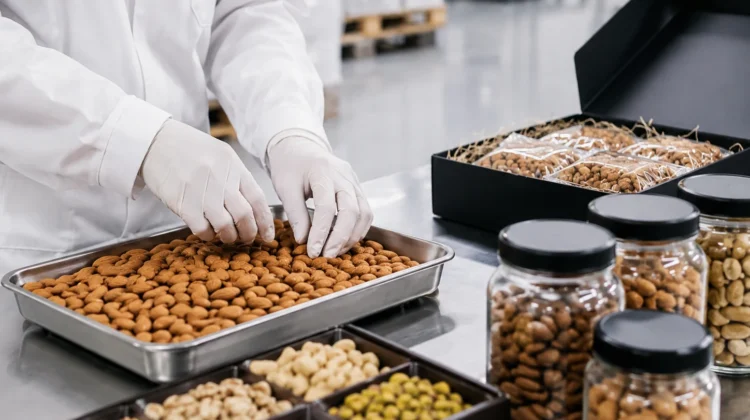
Inside Product Readiness: How Careful Handling Supports Better Food Trade
Product readiness is an important part of professional food trade. Before nuts, dates, dry fruits or other food ingredients move toward packing and shipment, the product requirement needs to be understood clearly and handled with care.
At Maahir International, product readiness is viewed as a coordinated commercial stage. It connects the buyer’s agreed specification with practical handling, preparation, packing expectations and destination requirements. A clearer readiness process can reduce confusion and support better communication between suppliers, buyers and trade partners.
What Does Product Readiness Mean in Food Trade?
Product readiness in food trade is not limited to placing goods into packaging. It begins with understanding what the buyer has requested and ensuring that the preparation conversation remains aligned with that requirement.
A readiness discussion may include:
- Product category and format
- Grade or size expectations
- Intended commercial use
- Approximate order volume
- Packing preference
- Destination market
- Required shipment timing
These details provide context for the next stage of the trade process. Without clear information, two parties may use the same product name while expecting different grades, formats or packing arrangements.
For example, a request for walnuts may refer to in-shell walnuts, walnut kernels, a particular size range or a format intended for retail, processing or wholesale distribution. Clear preparation begins by defining these differences.
Careful Handling Supports Product Consistency
Food products can be affected by unnecessary exposure, unsuitable handling conditions or unclear preparation practices. Careful handling helps keep the agreed product condition visible throughout the readiness stage.
This does not mean that every product follows one identical process. Different categories may require different handling considerations depending on their format, intended use and packing arrangement.
A professional handling approach may involve:
- Keeping products in an appropriate preparation environment
- Using clean handling tools and surfaces
- Separating different categories or product formats
- Monitoring the condition of products during preparation
- Keeping packing materials organised and suitable for the requirement
The objective is to support consistency between the product discussed during the sourcing stage and the product prepared for the commercial handoff.
Good product readiness begins with a clear requirement and continues through careful handling, practical preparation and responsible communication.
Why Specification Alignment Comes First
A product cannot be prepared correctly if the commercial requirement is still unclear.
Specification alignment allows the buyer and supplier to discuss the product in more useful terms. Instead of relying only on a category name, the conversation can include the exact details that influence suitability.
Important specification points may include:
Product Grade and Size
Grades and size expectations can differ between buyers and markets. These details should be clarified before preparation moves forward.
Product Format
A product may be required whole, in-shell, shelled, processed, powdered or in another agreed format. The intended application can influence which format is commercially suitable.
Packing Expectations
Bulk packing, specific pack sizes and custom packaging create different preparation requirements. Packing details should therefore be discussed early rather than added at the final stage.
Destination Context
The destination market or port can affect the information needed for packing, documentation and movement planning. Destination details help create a more complete readiness view.
Packing Is Part of the Commercial Requirement
Packing is not only a visual presentation decision. In B2B food trade, it is part of the wider product and shipment requirement.
A buyer may need bulk packaging for processing or distribution. Another buyer may require a particular pack size for handling, storage or resale. Qualified orders may also involve discussions around custom packaging or private-label requirements.
A clear packing discussion should consider:
- Type of product
- Approximate quantity
- Pack size
- Packing material
- Storage and handling context
- Destination requirements
- Commercial application
When these details are shared early, the preparation stage becomes easier to coordinate. It also helps prevent a situation where the selected product is suitable but the packing arrangement does not match the buyer’s operational needs.
Communication Keeps the Readiness Stage Connected
Product readiness involves several connected conversations. A change in quantity, packing or timing may affect how the next stage is approached.
For this reason, communication should remain clear throughout the preparation process.
Buyers should be informed when additional information is required. Suppliers and coordinators should also avoid making assumptions about specifications that have not been confirmed.
Useful communication at this stage may cover:
- Confirmation of the agreed requirement
- Clarification of missing details
- Packing expectations
- Destination information
- Required timing
- Next-stage coordination
Clear communication helps both sides understand what has been confirmed and what still needs to be discussed.
How Buyers Can Prepare a Better Product Brief
A buyer does not always need a fully detailed technical document to begin the conversation. However, sharing the available commercial information can make the first discussion more productive.
A useful product brief may include:
- The product category
- Preferred grade, size or format
- Approximate order quantity
- Intended use
- Packing preference
- Destination market or port
- Required delivery or planning window
When some details are still undecided, they can be identified as open questions. This is better than leaving important expectations unspoken.
Product Readiness as a Commercial Checkpoint
Product readiness should be treated as a commercial checkpoint between product selection and movement coordination.
At this point, the buyer and trade partner should have a shared understanding of:
- What product is being discussed
- What format or specification is expected
- What packing context applies
- Where the product is intended to move
- What information is required next
This creates a cleaner handoff into shipment and destination coordination.
It also helps keep the quotation, specification and preparation conversations connected rather than treating them as unrelated stages.
Maahir International’s Approach to Product Readiness
Maahir International supports B2B food-trade conversations from Dubai, with a focus on practical requirement clarity, product context and coordinated commercial communication.
Our product-readiness approach begins with the buyer’s requirement. We work to understand the category, volume, intended use, packing expectations and destination context before moving toward the next commercial stage.
The aim is not to make broad promises. It is to create a clearer discussion around what the buyer needs and what information is necessary for a responsible trade conversation.
Start With a Clear Product Requirement
Whether you are sourcing walnuts, dates, pistachios, almonds, dry figs or another food category, a stronger inquiry begins with clear commercial information.
Share your required product, approximate quantity, preferred format, packing expectations and destination. The Maahir International team can then help structure the next conversation around product fit and readiness.
Discuss your requirement with Maahir International:
Explore Our Trade Services or Contact Our Team