Premium Dry Figs: Uses, Formats and Buying Considerations
Dry figs are widely used in retail products, hospitality, bakery, food manufacturing and healthy snack applications. Their naturally sweet flavour, soft or chewy texture and versatile format make them suitable for both direct consumption and processed food products.
However, not every dry fig product has the same size, moisture, appearance, texture or intended use. Whole dry figs may suit retail presentation and gifting, while chopped or processed figs may perform better in bakery, snack-bar and manufacturing applications.
For commercial buyers, product selection should involve more than requesting a general dry fig price. The buyer should also consider origin, format, size, moisture, intended use, quantity, packing, storage and destination.
This guide explains common dry fig formats, food applications, quality considerations and the information buyers should prepare before beginning a commercial discussion.
What Are Dry Figs?
Figs grow as soft fruits with naturally occurring sugars, small edible seeds and a distinctive internal texture.
Drying reduces part of the fruit’s moisture and creates a product that can be stored and used differently from fresh figs.
Depending on the product and preparation process, dry figs may have:
- A soft or chewy texture
- A naturally sweet flavour
- Visible seeds
- A flattened or rounded shape
- Light, golden, brown or darker colouring
- A natural surface coating
- Different moisture levels
- Different size grades
Dry figs may be sold whole or processed into smaller formats.
Common commercial formats include:
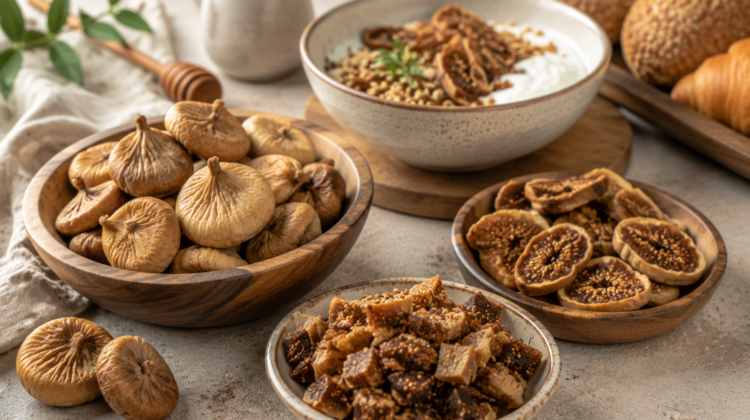
- Whole dry figs
- Flattened dry figs
- Sliced dry figs
- Chopped fig pieces
- Fig paste
- Processed fig ingredients
- Retail-packed dry figs
- Bulk-packed dry figs
Each format can serve a different commercial purpose.
Why Dry Figs Are Popular
Dry figs combine natural sweetness with a distinctive texture.
They are commonly used in:
- Direct snacking
- Dry-fruit assortments
- Bakery products
- Breakfast foods
- Confectionery
- Hospitality
- Gifting
- Food manufacturing
- Ingredient applications
Their visible seeds and soft internal structure can also add texture to recipes.
In addition, dry figs can pair well with:
- Walnuts
- Almonds
- Pistachios
- Dates
- Cheese
- Yogurt
- Oats
- Chocolate
- Bakery ingredients
However, the most suitable dry fig format depends on the final application.
Nutritional Characteristics of Dry Figs
Dry figs naturally contain:
- Dietary fibre
- Naturally occurring sugars
- Carbohydrates
- Small amounts of plant-based protein
- Minerals
- Naturally occurring plant compounds
Because drying removes part of the water, dried fruit generally contains more concentrated sugars and energy by weight than the fresh fruit.
Therefore, portion size remains important within a balanced diet.
Dry figs should not be presented as a treatment or cure for a medical condition. Businesses should describe their nutritional characteristics responsibly and avoid unsupported health claims.
Any formal nutrition information used on packaging should come from verified product data, approved databases or appropriate laboratory analysis.
Dry Figs and Dietary Fibre
Dry figs are commonly associated with fibre-containing diets.
Dietary fibre contributes to normal digestive function and can support a feeling of fullness.
For this reason, dry figs may appear in:
- Breakfast products
- Snack mixes
- Oat-based foods
- Nutrition bars
- Bakery products
- Fruit-and-nut combinations
However, a general description of fibre content does not justify claims that dry figs prevent or cure digestive problems.
Commercial food descriptions should remain factual and suitable for the destination market’s food-labelling requirements.
Naturally Occurring Sugar
Dry figs have a naturally sweet flavour because they contain naturally occurring fruit sugars.
This characteristic allows food producers to use them in products such as:
- Snack bites
- Fruit bars
- Bakery fillings
- Breakfast products
- Confectionery
- Dessert mixtures
Nevertheless, “naturally sweet” does not mean sugar-free.
Businesses should not describe a dry fig product as having no sugar unless verified product information and applicable labelling regulations support that statement.
Additional ingredients also matter. A plain dry fig product differs from one prepared with added sweeteners or coatings.
Buyers should confirm the exact product specification.
Whole Dry Figs
Whole dry figs retain the complete fruit form.
They may suit:
- Direct consumption
- Retail packs
- Hospitality service
- Premium gifting
- Dry-fruit platters
- Mixed-fruit assortments
- Wholesale distribution
Whole figs may differ in:
- Size
- Shape
- Colour
- Moisture
- Texture
- Surface condition
- Stem appearance
For retail products, visual consistency may be especially important.
In contrast, a food manufacturer may accept greater visual variation when the figs will be chopped, blended or processed.
Therefore, the buyer should connect appearance requirements with the intended use.
Sliced Dry Figs
Sliced dry figs expose the internal fruit structure and seeds.
They may work well in:
- Breakfast bowls
- Bakery toppings
- Cheese boards
- Hospitality presentation
- Retail snack products
- Premium dessert decoration
Sliced figs can create visual appeal, but the cutting process introduces additional handling.
Buyers may need to consider:
- Slice thickness
- Piece consistency
- Moisture
- Stickiness
- Packing
- Shelf-life expectations
- Storage
The buyer should also confirm whether the sliced format will remain separate during storage or whether pieces may stick together.
Chopped Fig Pieces
Chopped dry figs can suit food manufacturers and commercial kitchens.
Common applications include:
- Bakery mixtures
- Cookies
- Cakes
- Snack bars
- Granola
- Breakfast cereals
- Fruit fillings
- Confectionery
- Processed-food products
The required piece size depends on the production process.
Large pieces may provide visible fruit texture, while smaller pieces may distribute more evenly through dough, cereal or snack-bar mixtures.
Manufacturing buyers may need to confirm:
- Piece-size range
- Moisture condition
- Flowability
- Stickiness
- Ingredient consistency
- Packing format
- Batch requirements
A general request for “chopped figs” may not provide enough production detail.
Fig Paste and Processed Fig Ingredients
Fig paste may be used in:
- Bakery fillings
- Fruit bars
- Confectionery
- Sauces
- Spreads
- Processed desserts
- Snack products
The buyer should clarify:
- Intended application
- Required texture
- Desired consistency
- Ingredient expectations
- Packing format
- Approximate volume
- Production requirements
Processed fig products may also contain other ingredients.
Therefore, buyers should review the complete product specification rather than assuming that every fig paste contains only figs.
Manufacturers should also confirm allergen, additive and labelling information where relevant.
Common Culinary Uses of Dry Figs
Dry figs support several household and commercial food applications.
Direct Consumption
Whole dry figs can be eaten as a standalone snack or combined with nuts and other dried fruits.
Common pairings include:
- Walnuts
- Almonds
- Pistachios
- Dates
- Raisins
- Cheese
- Yogurt
Retail and hospitality businesses may present dry figs in pouches, jars, platters or gifting assortments.
Breakfast Products
Dry figs may appear in:
- Oatmeal
- Porridge
- Granola
- Breakfast cereals
- Yogurt bowls
- Smoothie bowls
- Fruit-and-nut mixes
Sliced or chopped formats may distribute more evenly than whole figs.
The correct choice depends on presentation, portion size and operational convenience.
Bakery Products
Bakeries may use dry figs in:
- Bread
- Cookies
- Cakes
- Muffins
- Pastries
- Tarts
- Fruit loaves
- Dessert fillings
Whole or sliced figs may provide visual presentation, while chopped figs can blend more easily into dough or fillings.
Bakery buyers should explain whether they need:
- Visible pieces
- Even distribution
- A soft filling
- A topping
- A processed fruit ingredient
This helps define the correct format.
Confectionery
Dry figs may be combined with:
- Chocolate
- Nuts
- Coconut
- Spices
- Fruit pastes
- Sweet fillings
Confectionery businesses should consider how fig moisture and texture interact with the other ingredients.
A moist product may behave differently from a firmer dry fig during coating, cutting or storage.
Therefore, product developers should test the complete formulation before commercial production.
Savoury Uses
Dry figs may also support savoury food applications.
They can appear in:
- Salads
- Cheese boards
- Sauces
- Stuffing
- Meat dishes
- Plant-based dishes
- Grain bowls
- Hospitality platters
Their sweetness can contrast with salty, acidic or savoury ingredients.
However, foodservice businesses should select a format that supports quick preparation and consistent portioning.
Dry Fig and Nut Snack Mix
Dry figs can combine well with nuts in snack mixes.
A simple mixture may include:
- Dry fig pieces
- Walnuts
- Almonds
- Pistachios
- Raisins
- Seeds
Commercial snack producers should also consider:
- Ingredient proportions
- Piece size
- Moisture interaction
- Allergen labelling
- Product separation
- Packaging
- Shelf life
- Storage
Mixing products with different moisture levels may affect texture and shelf stability.
Therefore, businesses should validate the complete product rather than assuming that every ingredient combination will remain stable.
Dry Fig Breakfast Bowl
A simple breakfast application may include:
- Yogurt or a suitable alternative
- Oats or granola
- Fresh fruit
- Sliced dry figs
- Almonds or walnuts
Hospitality businesses may use dry figs in breakfast buffets and individual servings.
Sliced figs may offer better visual presentation, while chopped pieces may be easier to portion.
The business should consider:
- Serving size
- Preparation time
- Product stickiness
- Storage
- Allergen controls for accompanying nuts
Dry Fig Bakery Filling
Dry figs can become part of a bakery filling.
A basic preparation may involve softening or processing the figs and combining them with suitable ingredients.
However, commercial production requires control over:
- Ingredient ratios
- Moisture
- Texture
- Heating
- Cooling
- Food safety
- Shelf life
- Packaging
The buyer should select a dry fig format that matches the intended production method.
For example, fig paste may provide a more consistent filling than whole figs when the manufacturer needs smooth processing.
Product Origin
Dry figs may come from different producing regions.
Origin can influence:
- Variety
- Size
- Shape
- Colour
- Texture
- Moisture
- Harvest timing
- Processing methods
- Commercial availability
However, origin alone does not guarantee quality.
Two suppliers from the same country may offer products with different specifications and handling standards.
Therefore, buyers should consider origin together with:
- Grade
- Size
- Product condition
- Format
- Packing
- Documentation
- Intended use
Size and Grading
Dry figs may be grouped according to size or other commercial criteria.
Larger figs may suit premium retail or gifting applications. Smaller figs may still work effectively in foodservice, processing or manufacturing.
The correct size depends on:
- Intended use
- Customer expectations
- Presentation
- Portion control
- Processing
- Budget
Buyers should avoid assuming that the largest size is always the best option.
A bakery that chops the product may not require premium whole-fruit presentation.
Meanwhile, a luxury gift pack may place greater importance on size and visual consistency.
Colour and Appearance
Dry figs can have natural colour variation.
Depending on the variety, origin, drying process and storage, they may appear:
- Golden
- Light brown
- Medium brown
- Dark brown
- Mixed in colour
Some variation may be natural.
However, buyers should still discuss:
- Expected colour range
- Uniformity
- Surface condition
- Physical damage
- Foreign material
- Product cleanliness
- Signs of unsuitable storage
Appearance requirements should match the intended application.
A manufacturing buyer may accept more variation than a premium retail buyer.
Texture and Moisture
Moisture strongly influences dry fig texture.
Products may range from:
- Soft and flexible
- Chewy
- Firm
- Relatively dry
A softer fig may suit direct consumption or some fillings. A firmer product may perform differently during chopping, packing or storage.
However, excessive moisture may create handling and storage concerns, while very low moisture may make the product too hard for some applications.
Buyers should therefore explain the preferred texture and intended use.
The supplier’s formal specification should guide the commercial decision.
Natural Sugar Crystallisation
Dry figs may sometimes show a light-coloured surface layer caused by naturally occurring sugars moving to the surface.
This can differ from mould or contamination.
However, website photographs or general descriptions cannot confirm the cause of every surface mark.
Businesses should inspect the product properly and consult the supplier when appearance creates uncertainty.
Buyers should not automatically assume that every white surface mark is harmless sugar crystallisation.
Similarly, they should not classify every natural surface change as spoilage without appropriate inspection.
Food Safety and Product Condition
Dry figs require responsible handling and food-safety controls.
Buyers may need to consider:
- Product cleanliness
- Foreign-material control
- Pest control
- Moisture condition
- Microbiological requirements
- Storage
- Packing
- Traceability
- Relevant testing
- Destination-market requirements
The required documentation depends on the buyer, application and destination.
A general premium description does not replace agreed specifications or food-safety verification.
Formal commercial decisions should rely on suitable documentation, product checks and transaction-specific information.
Sulphites and Other Ingredients
Some dried-fruit products may use preservatives or processing aids, while others may not.
Buyers should confirm:
- Whether sulphites are present
- Whether preservatives are used
- Whether sugar has been added
- Whether oil or coating is present
- Whether other ingredients form part of the product
- What declarations appear on the label
Businesses should not assume that every dry fig product has the same ingredient profile.
Where sulphites or other declarable ingredients are present, the business should follow applicable labelling and allergen rules.
Allergen and Cross-Contact Considerations
Figs are not tree nuts. However, dry figs may be packed, stored or processed in facilities that also handle nuts, sesame or other allergens.
Therefore, food businesses should confirm:
- Facility allergen controls
- Cross-contact statements
- Packaging declarations
- Supplier documentation
- Destination-market labelling requirements
A dry fig and nut mix will also require clear declarations for the included nuts.
Businesses should not make allergen-free claims without suitable evidence and controls.
Packing Options
Dry figs may be supplied in several commercial packing formats.
These can include:
- Bulk cartons
- Food-grade bags
- Lined cartons
- Foodservice packs
- Retail pouches
- Plastic containers
- Gift boxes
- Custom packaging
- Private-label formats
The appropriate packing depends on:
- Product format
- Quantity
- Moisture
- Intended use
- Storage
- Distribution method
- Destination
- Retail presentation
Packing must protect the product from contamination, moisture changes, physical damage and unsuitable external conditions.
Buyers should discuss packing during the initial commercial conversation.
Bulk Packing
Bulk packing may suit:
- Wholesale distribution
- Repacking
- Food manufacturing
- Bakery production
- Foodservice
- Ingredient supply
Bulk buyers should confirm:
- Net weight
- Inner liner
- Outer carton
- Product arrangement
- Lot identification
- Handling requirements
- Storage instructions
The lowest-cost packing option may not always provide the protection required for the product or destination.
Retail Packing
Retail packing may involve:
- Pouches
- Trays
- Containers
- Jars
- Gift boxes
- Branded packaging
Retail buyers may focus on:
- Visual presentation
- Pack size
- Consumer convenience
- Labelling
- Product protection
- Shelf display
- Branding
- Destination regulations
Custom packaging may require additional design, approval, printing and production time.
Therefore, buyers should introduce retail-packing requirements early.
Storage of Dry Figs
Dry figs should be stored in a suitable food-storage environment.
Businesses should generally protect them from:
- Excessive heat
- Moisture
- Direct sunlight
- Contamination
- Pests
- Strong external odours
- Damaged packaging
- Uncontrolled exposure
Appropriate storage may involve:
- A clean area
- A dry environment
- Suitable temperature control
- Sealed packaging
- Stock rotation
- Regular condition checks
- Separation from chemicals and strong-smelling materials
The exact storage requirements should follow the product format, packing, supplier guidance and local conditions.
Poor storage may affect:
- Flavour
- Aroma
- Texture
- Moisture
- Appearance
- Shelf life
Stock Rotation
Food businesses should use an organised stock-rotation system.
This may include:
- Recording receipt dates
- Tracking lot numbers
- Following expiry or best-before information
- Using suitable first-in, first-out procedures
- Inspecting product condition
- Keeping storage records
- Separating damaged stock
A clear stock system supports traceability and reduces unnecessary waste.
Businesses should not rely only on memory or visual placement when managing commercial quantities.
Shelf-Life Considerations
Shelf life depends on several factors:
- Product moisture
- Drying process
- Packaging
- Storage temperature
- Hygiene
- Product handling
- Added ingredients
- Exposure after opening
Buyers should request product-specific shelf-life information rather than applying one general period to every dry fig product.
Retailers and manufacturers should also consider how repacking or opening the original packaging may affect product condition.
Commercial shelf-life claims should use suitable validation and documentation.
Buying Dry Figs for Retail
Retail buyers may prioritise:
- Whole-fruit appearance
- Size consistency
- Colour
- Texture
- Packaging
- Consumer preferences
- Product story
- Shelf presentation
- Portion size
A premium retail product may require visually consistent whole figs.
Meanwhile, a value-focused range may use a different size or grade while still meeting the agreed specification.
The buyer should define the target customer and product positioning before selecting the final format.
Buying Dry Figs for Food Manufacturing
Manufacturing buyers may focus more on:
- Piece size
- Moisture
- Processing performance
- Stickiness
- Ingredient consistency
- Batch uniformity
- Packing efficiency
- Supply planning
- Traceability
For example, a snack-bar manufacturer may require chopped fig pieces that distribute evenly through production.
A bakery filling producer may prefer fig paste or a format that can be processed efficiently.
Therefore, manufacturing buyers should explain their production application clearly.
Buying Dry Figs for Hospitality
Hospitality businesses may use dry figs in:
- Breakfast buffets
- Cheese boards
- Guest amenities
- Dessert platters
- Gifting
- Event catering
- Premium food displays
They may require a balance between appearance, portion control, ease of service and product consistency.
Whole figs may suit presentation, while sliced or chopped figs may work better for breakfast or dessert preparation.
The buyer should also consider storage and opened-pack handling.
Information Dry Fig Buyers Should Provide
A useful dry fig inquiry should include:
Required Format
State whether you require whole figs, sliced figs, chopped pieces, fig paste or another processed format.
Intended Use
Explain whether the product is for retail, wholesale, bakery, food manufacturing, hospitality or gifting.
Size or Grade
Share known expectations or explain where guidance is required.
Texture or Moisture Preference
Describe whether the application requires a soft, chewy or firmer product.
Approximate Quantity
Provide an estimated bulk requirement or quantity range.
Packing Preference
State whether you require bulk packing, foodservice packs, retail packs or custom packaging.
Destination
Include the country, market or port.
Required Timing
Explain when you expect to purchase, move or receive the product.
Documentation Requirements
Mention any required specification, testing, origin, ingredient, certification or traceability documents.
This information helps create a more accurate commercial response.
Common Dry Fig Buying Mistakes
Buyers should avoid several common mistakes.
Requesting Only a Dry Fig Price
Price can vary according to origin, size, grade, format, quantity, packing and current commercial conditions.
Assuming Every Dry Fig Has the Same Texture
Moisture and processing can create significant texture differences.
Choosing by Size Alone
The intended application may matter more than selecting the largest fruit.
Ignoring Product Format
Whole figs, chopped pieces and fig paste serve different purposes.
Leaving Packing Until the Final Stage
Packing affects product protection, preparation and the commercial timeline.
Assuming Surface Colour Always Indicates Spoilage
Natural sugar crystallisation and other surface changes require proper inspection.
Ignoring Ingredient Declarations
Buyers should confirm whether preservatives, sulphites, sugar or other ingredients are present.
Using Unsupported Health Claims
Product communication should remain factual and compliant.
How Maahir International Supports Dry Fig Inquiries
Maahir International supports international B2B conversations involving dry figs, dates, walnuts, almonds, pistachios and selected food ingredients.
For dry fig requirements, buyers should share:
- Required format
- Intended application
- Preferred size or grade
- Texture or moisture expectations
- Approximate quantity
- Packing preference
- Destination
- Documentation needs
- Expected timing
This information helps structure a clearer discussion around product suitability and the next commercial step.
Start a Dry Fig Product Conversation
Dry figs can support retail, hospitality, bakery, gifting and food-manufacturing applications.
However, whole figs, sliced figs, chopped pieces and processed fig ingredients serve different commercial purposes.
The correct choice depends on intended use, size, texture, moisture, quantity, packing, destination and required timing.
Businesses interested in premium dry figs can begin by preparing a clear product requirement.