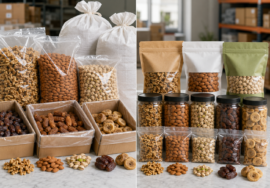
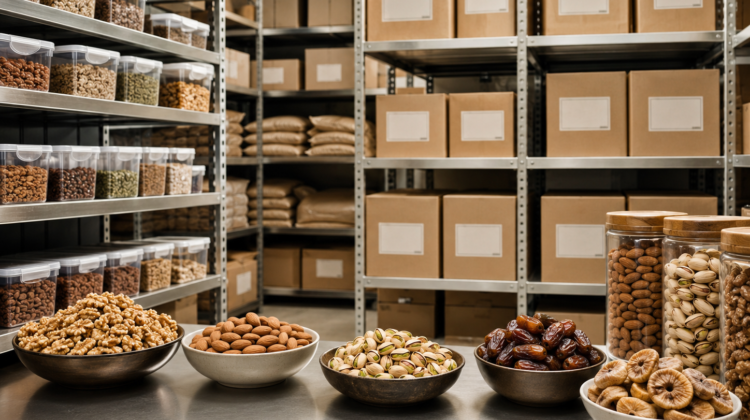
How to Store Nuts, Dates and Dry Fruits Properly
Proper storage helps protect the flavour, texture, appearance and commercial condition of nuts, dates and dry fruits.
Although these products often have a longer usable life than fresh fruits, they can still be affected by heat, moisture, oxygen, light, pests, contamination and strong external odours.
Walnut kernels, almonds, pistachios, dates and dry figs also behave differently during storage. Some contain natural oils, while others have higher moisture or naturally sticky textures.
Therefore, businesses should not apply one general storage rule to every product.
The correct storage plan should consider product format, packaging, supplier guidance, intended storage period, local environmental conditions and the buyer’s own handling process.
This guide explains the main storage principles for nuts, dates and dry fruits in wholesale, retail, hospitality and food-manufacturing environments.
Why Proper Storage Matters
Storage begins when the buyer receives the product and continues until it enters production, repacking, distribution or final sale.
Poor storage can affect:
- Flavour
- Aroma
- Texture
- Colour
- Moisture condition
- Packaging
- Product cleanliness
- Shelf life
- Processing performance
- Customer satisfaction
For example, walnut kernels can absorb external odours and may develop undesirable flavours when exposed to unsuitable heat or air.
Dates may become excessively soft, sticky or dry when the surrounding conditions do not match the product.
Dry figs can also change in texture and surface condition when exposed to uncontrolled moisture.
Therefore, storage should form part of the buyer’s product-planning process rather than becoming an afterthought.
Start with the Supplier’s Storage Guidance
General storage guidance can help buyers understand the main principles. However, the supplier’s product-specific instructions should remain the starting point.
Buyers should confirm:
- Recommended storage conditions
- Packaging requirements
- Product shelf life
- Guidance after opening
- Temperature expectations
- Moisture considerations
- Handling restrictions
- Stock-rotation instructions
These details may differ according to:
- Product type
- Product format
- Processing
- Packaging material
- Added ingredients
- Intended market
- Planned storage period
For example, plain almonds and seasoned almonds may not have identical storage needs.
Similarly, whole dates, pitted dates and date paste can require different handling.
Keep the Storage Area Clean
A clean storage environment helps protect food products from contamination.
The storage area should remain free from:
- Dust
- Food debris
- Spilled liquids
- Damaged packaging
- Waste
- Chemicals
- Pest activity
- Unrelated materials
- Strong-smelling products
Businesses should establish regular cleaning procedures.
The cleaning plan may include:
- Shelving
- Floors
- Walls
- Pallets
- Containers
- Handling equipment
- Receiving areas
- Repacking areas
Cleaning chemicals should remain separate from food products.
Businesses should also prevent cleaning water or moisture from entering cartons, bags or open containers.
A clean-looking facility is not enough. The business should maintain documented and consistent hygiene practices.
Use a Cool Storage Environment
Excessive heat can affect nuts and dry fruits.
Many nuts contain natural oils. When exposed to unsuitable temperatures for extended periods, their flavour and aroma may change.
Heat may also affect:
- Product texture
- Packing materials
- Shelf-life performance
- Moisture movement
- Ingredient stability
- Customer acceptance
Businesses should avoid placing products:
- Near direct sunlight
- Beside heating equipment
- Near hot machinery
- Against warm walls
- In vehicles for unnecessary periods
- In poorly ventilated storage spaces
The exact suitable temperature depends on the product and supplier guidance.
Therefore, businesses should monitor their actual storage conditions rather than relying only on how the room feels.
Protect Products from Moisture
Moisture control is one of the most important storage considerations.
Excess moisture may contribute to:
- Texture changes
- Product clumping
- Stickiness
- Packaging damage
- Surface changes
- Microbial concerns
- Reduced product stability
Very dry conditions may also affect some products by making them firmer or changing their texture.
The correct moisture environment depends on the product.
Businesses should:
- Keep products away from water sources
- Inspect ceilings and pipes for leaks
- Avoid storing products directly on the floor
- Protect goods from condensation
- Close packs after opening
- Monitor humid storage areas
- Replace damaged packaging
- Follow supplier guidance
A warehouse may appear dry during one season but become more humid during another.
Therefore, storage conditions should receive ongoing review.
Avoid Direct Sunlight
Direct sunlight can increase heat and expose products or packaging to strong light.
This may affect:
- Product temperature
- Natural colour
- Flavour
- Packaging strength
- Printed labels
- Product stability
Businesses should store nuts and dry fruits away from:
- Windows receiving strong sunlight
- Open warehouse entrances
- Transparent roofs without protection
- Outdoor loading areas
- Vehicles parked in direct sunlight
Retail displays should also consider light exposure.
A transparent pouch or jar may create good product visibility, but the business should still protect the product from prolonged direct sunlight.
Use Sealed Food-Grade Containers
After opening a bulk pack, businesses should transfer or protect the remaining product appropriately.
Suitable options may include:
- Resealed original packaging
- Food-grade containers
- Lidded bins
- Sealed pouches
- Product-specific storage boxes
- Approved foodservice containers
Containers should be:
- Clean
- Dry
- Suitable for food contact
- Properly closed
- Clearly identified
- Easy to inspect
- Appropriate for the product
Businesses should avoid using unidentified household or industrial containers for commercial food storage.
The container should also protect the product from:
- Moisture
- Dust
- Pests
- Strong odours
- Unnecessary handling
- Cross-contact
Keep Packaging Intact
Original commercial packaging provides important product protection.
Businesses should inspect packaging for:
- Tears
- Holes
- Broken seals
- Water damage
- Crushing
- Open cartons
- Loose liners
- Missing labels
- Pest damage
- Product leakage
Damaged packs should not remain mixed with acceptable stock without review.
The business should determine:
- What caused the damage
- Whether the product remains suitable
- Whether contamination may have occurred
- Whether repacking is permitted
- Whether the supplier should be informed
- Whether the lot requires isolation
Simply covering a damaged carton with tape may not solve the underlying food-safety or product-protection concern.
Store Products Away from Strong Odours
Nuts and dry fruits can absorb or retain external odours.
They should not be stored near:
- Cleaning chemicals
- Fuels
- Paint
- Perfumes
- Strong spices
- Onions
- Industrial materials
- Waste
- Fragranced products
Even when the outer packaging remains closed, long exposure to a strong-smelling environment may create product concerns.
Warehouses should organise food products by compatibility.
Businesses should also avoid using storage containers that previously held strong-smelling materials unless those containers are suitable, properly cleaned and approved for food use.
Store Goods Above the Floor
Commercial food products should generally remain above the floor on suitable shelving, pallets or storage systems.
This helps support:
- Cleaning
- Air circulation
- Inspection
- Moisture protection
- Pest monitoring
- Product organisation
- Safe handling
Products should not remain directly against walls where inspection and cleaning become difficult.
However, the exact spacing and storage arrangement should follow the business’s food-safety system and local requirements.
Pallets and shelves should remain:
- Clean
- Dry
- Structurally sound
- Suitable for food-storage areas
- Free from visible contamination
- Properly arranged
Protect Products from Pests
Nuts, dates and dry fruits can attract insects and other pests.
A responsible pest-management programme may include:
- Regular inspection
- Sealed entry points
- Clean storage areas
- Proper waste control
- Monitoring devices
- Trained pest-control services
- Product isolation procedures
- Record keeping
- Investigation of damaged packs
Businesses should look for signs such as:
- Holes in packaging
- Insects
- Webbing
- Droppings
- Unusual dust
- Damaged cartons
- Product movement
- Unexplained contamination
Pest-control chemicals should not create an additional food-safety risk.
The business should use approved procedures and qualified personnel where required.
Apply Proper Stock Rotation
Stock rotation helps businesses use products in an organised sequence.
Common systems may include:
- First In, First Out
- First Expired, First Out
- Lot-based rotation
- Best-before-date control
The suitable method depends on the product and business operation.
Businesses should record:
- Receiving date
- Product name
- Supplier
- Lot number
- Best-before or expiry information
- Pack quantity
- Storage location
- Opening date
- Remaining stock
Older approved stock should not become hidden behind newer deliveries.
A clear stock-rotation system can reduce:
- Product waste
- Expired stock
- Forgotten inventory
- Traceability problems
- Unnecessary quality loss
Record the Date After Opening
Opening a pack changes the product’s exposure.
After opening, the product may face greater contact with:
- Air
- Humidity
- Odours
- Handling
- Equipment
- Other ingredients
Businesses should mark or record:
- Date opened
- Product lot
- Storage container
- Responsible staff member
- Recommended use period after opening
- Repacking information
The exact after-opening period should follow supplier guidance and the business’s validated procedures.
Staff should not rely only on memory.
A container without an opening date may create confusion about product age and suitability.
Keep Product Identification with the Product
When transferring food into another container, businesses should not lose the original product identity.
The new container should remain linked with:
- Product name
- Product format
- Supplier
- Lot number
- Best-before or expiry information
- Opening date
- Allergen information
- Storage instructions
Without this information, the business may lose traceability.
For example, two almond products may look similar but come from different lots or suppliers.
Mixing them without records can create problems during:
- Product complaints
- Quality investigations
- Allergen reviews
- Stock rotation
- Recall procedures
Avoid Mixing Different Lots Without Control
Businesses should not casually mix products from different batches or lots.
Different lots may have different:
- Receiving dates
- Product conditions
- Specifications
- Shelf-life dates
- Supplier documents
- Test results
If operational needs require lot mixing, the business should use a documented and controlled procedure.
Otherwise, mixing may reduce traceability.
A complaint involving one lot can become harder to investigate when several lots have been combined without records.
Receiving Inspection Comes Before Storage
Proper storage begins during receiving.
Before placing the product into the warehouse, the business should inspect:
- Product name
- Quantity
- Packing condition
- Lot number
- Date information
- Transport condition
- Visible contamination
- Moisture damage
- Pest signs
- Unusual odours
- Physical damage
- Required documents
The receiving team should compare the delivery with:
- Purchase order
- Product specification
- Packing requirements
- Delivery documents
Products with serious concerns should remain isolated until the business reviews them.
They should not enter normal stock automatically.
Store Allergens Carefully
Walnuts, almonds and pistachios are tree nuts and require allergen controls.
Businesses should consider:
- Clear product labelling
- Identified storage zones
- Closed containers
- Spill controls
- Cleaning procedures
- Staff training
- Shared equipment
- Repacking areas
- Cross-contact risks
Dry fruits may not themselves be tree nuts, but they may be stored or packed in facilities that handle nuts.
Therefore, businesses should review supplier allergen declarations.
When storing different products in the same facility, the business should prevent unintentional mixing or cross-contact.
Allergen management should connect storage, handling, production and labelling.
Storing Walnut Kernels
Walnut kernels require careful storage because the edible kernel is exposed after shell removal.
Buyers should protect them from:
- Heat
- Moisture
- Oxygen exposure
- Strong odours
- Light
- Physical breakage
- Contamination
Walnut kernels should remain in suitable sealed packaging.
Businesses should also minimise unnecessary opening and handling.
Whole kernels and halves may require additional protection from breakage.
A bakery that accepts smaller pieces may have different handling priorities from a premium retail business selling visually consistent halves.
Therefore, storage and handling should match the final application.
Storing In-Shell Walnuts
The shell provides physical protection, but in-shell walnuts still require suitable storage.
Businesses should protect them from:
- Moisture
- Pest activity
- Heat
- Contamination
- Shell damage
- Strong odours
- Unsuitable stacking
The buyer should inspect both:
- External shell condition
- Internal kernel quality, where appropriate
A good-looking shell does not automatically confirm the condition inside.
Businesses planning to crack and process the walnuts should also protect them from excessive physical pressure and uncontrolled environmental exposure.
Storing Almonds
Almonds contain natural oils and should remain in clean, cool and dry conditions.
Businesses should protect them from:
- Moisture
- Heat
- Strong odours
- Direct sunlight
- Pest exposure
- Contamination
- Packaging damage
Different almond formats may require different handling.
For example:
- Whole almonds may tolerate handling differently from sliced almonds.
- Sliced almonds can break more easily.
- Ground almonds have greater exposed surface area.
- Seasoned almonds may contain additional ingredients.
Therefore, buyers should follow product-specific guidance rather than applying one rule to all almond formats.
Storing Pistachios
Pistachios may be supplied in-shell or as kernels.
In-shell pistachios should remain protected from contamination, moisture and pest exposure.
Pistachio kernels require additional care because the edible portion is exposed.
Buyers should also consider whether the product is:
- Plain
- Roasted
- Salted
- Flavoured
- Processed
Additional ingredients or processing can influence storage and labelling requirements.
Businesses should keep pistachios in sealed packs and monitor product condition throughout the storage period.
Storing Dates
Dates can differ significantly in moisture, texture and variety.
Some dates are softer and more moist, while others are firmer or relatively dry.
Therefore, buyers should confirm the exact product guidance.
Dates should generally remain protected from:
- Excessive heat
- Contamination
- Moisture changes
- Physical pressure
- Pests
- Strong odours
- Damaged packaging
Soft dates may become sticky or compressed when handled poorly.
Whole dates, pitted dates and date paste also have different practical requirements.
Businesses should avoid stacking heavy cartons in a way that damages the product or retail presentation.
Storing Dry Figs
Dry figs may differ by size, moisture, texture and processing method.
Businesses should protect them from:
- Uncontrolled moisture
- Excessive heat
- Pest activity
- Contamination
- Strong odours
- Packaging damage
- Physical pressure
Dry figs may sometimes show natural surface changes.
However, staff should not assume that every surface mark is harmless.
When product appearance changes unexpectedly, the business should:
- Isolate the affected stock
- Review storage records
- Check supplier guidance
- Inspect packaging
- Confirm whether testing or expert review is needed
Product safety should not be decided only through appearance.
Bulk Storage and Retail Storage Are Different
Bulk products and retail-packed products create different storage needs.
Bulk Storage
Bulk packs may require:
- Pallet storage
- Large shelving
- Warehouse handling
- Strong outer cartons
- Lot control
- Controlled opening procedures
- Repacking areas
Retail Storage
Retail packs may require:
- SKU organisation
- Barcode control
- Carton protection
- Shelf-ready handling
- Pack-presentation protection
- Consumer-label checks
Retail packs can become damaged through crushing, scratching, tearing or exposure to sunlight.
Bulk packs may face greater risks after opening because larger quantities remain exposed.
Therefore, the business should design separate procedures for each packing format.
Storage After Repacking
Repacking changes the original product environment.
The repacker should control:
- Cleanliness
- Packaging material
- Exposure time
- Product handling
- Allergen cross-contact
- Net weight
- Seal quality
- Lot coding
- Label accuracy
- New shelf-life basis
- Storage conditions
The original supplier’s shelf life may not automatically apply after repacking.
Repacking can change exposure to air, moisture and handling.
Therefore, businesses should validate their own packing and shelf-life system.
Cold Storage and Refrigeration
Some businesses may use cooler or refrigerated conditions for particular products or storage periods.
However, refrigeration should not be applied without considering:
- Product guidance
- Packaging
- Condensation
- Temperature changes
- Storage duration
- Intended use
- Local conditions
Moving a cold product into a warm, humid environment may create condensation.
Condensation can affect packaging and product condition.
Therefore, businesses should control temperature transitions and follow suitable procedures.
The coldest possible environment is not automatically the best environment for every product.
Avoid Repeated Temperature Changes
Repeated movement between warm and cool environments can create storage concerns.
Possible effects may include:
- Condensation
- Moisture movement
- Packaging stress
- Texture changes
- Product instability
Businesses should avoid unnecessary movement between:
- Cold rooms
- Warm warehouses
- Outdoor loading areas
- Hot vehicles
- Retail shelves
A controlled supply chain supports more consistent product conditions.
Receiving, storage, production and dispatch teams should understand how temperature transitions affect the product.
Monitor Storage Conditions
Businesses should not assume that warehouse conditions remain stable.
Monitoring may include:
- Temperature records
- Humidity records
- Pest-control records
- Cleaning records
- Stock inspections
- Packaging checks
- Product-condition reviews
The level of monitoring depends on the product, facility and food-safety system.
Records can help businesses investigate:
- Product complaints
- Texture changes
- Moisture damage
- Pest concerns
- Packaging failures
- Shelf-life problems
Without records, businesses may struggle to identify when or why a storage problem developed.
Check Products Regularly
Long-term stock should receive regular condition checks.
The inspection may consider:
- Packaging integrity
- Product odour
- Visible moisture
- Physical damage
- Pest signs
- Colour changes
- Texture changes
- Lot identification
- Date information
- Storage area cleanliness
Staff should not open every package unnecessarily.
Instead, the inspection plan should balance product protection with appropriate monitoring.
Any unusual product should remain isolated until the business confirms its status.
Do Not Rely Only on the Best-Before Date
A best-before date provides important information, but it does not replace proper storage.
A product may lose quality earlier when exposed to:
- Heat
- Moisture
- Damaged packing
- Strong odours
- Contamination
- Poor handling
Similarly, a pack that remains within its date may still require rejection when it shows clear signs of damage or contamination.
Businesses should consider:
- Date information
- Storage records
- Packaging
- Product condition
- Supplier guidance
The date should form part of the decision rather than becoming the only factor.
Prevent Physical Damage
Heavy stacking or rough handling can damage nuts and dry fruits.
Possible effects include:
- Broken kernels
- Crushed dates
- Flattened figs
- Damaged retail packs
- Split cartons
- Torn liners
- Product leakage
Businesses should:
- Follow carton-stacking limits
- Use suitable pallets
- Train handling staff
- Avoid throwing packs
- Protect delicate formats
- Inspect pallets
- Secure loads properly
The acceptable level of breakage depends on the application.
A bakery may accept walnut pieces, while a premium retail buyer may require intact halves.
Storage should therefore reflect the buyer’s product specification.
Separate Food from Non-Food Materials
Food-storage areas should not become general warehouse spaces.
Products should remain separate from:
- Chemicals
- Cleaning agents
- Maintenance tools
- Fuel
- Paint
- Packaging waste
- Personal items
- Pest-control materials
- Damaged goods
The business should create clear storage zones.
Non-food materials can introduce:
- Odours
- Contamination
- Physical hazards
- Chemical risks
- Operational confusion
Clear zoning also makes cleaning and inspection easier.
Prepare for Power or Equipment Failure
Businesses using controlled storage equipment should prepare for possible failure.
A contingency plan may include:
- Temperature alarms
- Backup power
- Emergency contacts
- Alternative storage space
- Product-transfer procedures
- Condition assessment
- Record keeping
- Supplier or expert consultation
The plan should explain what staff should do when:
- Refrigeration fails
- Warehouse cooling stops
- Water enters the facility
- Packaging becomes damaged
- Temperature limits are exceeded
Waiting until the problem occurs can increase product loss and safety risks.
Common Storage Mistakes
Businesses should avoid several common mistakes.
Storing Products Directly on the Floor
This can make cleaning, inspection and moisture protection more difficult.
Leaving Open Packs Unsealed
Open packs increase exposure to air, moisture, pests and contamination.
Storing Products Near Strong Odours
Nuts and dry fruits may absorb undesirable smells.
Ignoring Warehouse Humidity
A dry-looking warehouse can still experience seasonal humidity changes.
Mixing Lots Without Records
This can reduce traceability and complicate investigations.
Relying Only on Product Appearance
Food condition may require documentation, sensory checks or testing.
Using Unlabelled Containers
The business may lose lot, allergen and date information.
Overstacking Cartons
Excessive pressure can damage products and packaging.
Keeping Expired or Damaged Stock with Saleable Goods
Questionable products should remain clearly isolated.
Applying One Storage Rule to Every Product
Dates, walnut kernels, dry figs and almonds can have different requirements.
Warehouse Storage Checklist
A practical storage checklist may include:
Storage area clean
Products stored above floor
Goods separated from walls where required
Packaging intact
Lots clearly identified
Best-before dates visible
Opening dates recorded
Products protected from sunlight
Strong-smelling materials separated
Pest checks completed
Temperature monitored where required
Humidity monitored where required
Allergen controls applied
Damaged stock isolated
Stock rotation updated
Cleaning records completed
The business should adapt the checklist to its actual food-safety and operational system.
Questions Buyers Should Ask Suppliers
Before receiving a bulk order, buyers may ask:
- What storage conditions do you recommend?
- Does the product require temperature control?
- How should the pack be handled after opening?
- What shelf-life information applies?
- Which packaging materials are used?
- Should the product remain in the original pack?
- What signs of storage damage should we monitor?
- Are there allergen or cross-contact considerations?
- Which lot and date information appears on the pack?
- Does repacking affect shelf-life guidance?
These questions help the buyer prepare suitable storage before the product arrives.
Preparing a Storage Plan Before Ordering
Before placing a large order, the buyer should confirm:
- Available warehouse space
- Product storage requirements
- Pallet and shelving capacity
- Temperature and humidity conditions
- Pest-control systems
- Stock-rotation process
- Allergen-storage controls
- Repacking facilities
- Staff training
- Expected use period
A business should not order a large commercial quantity without confirming that it can store and use the product appropriately.
An unsuitable warehouse can affect a good product after delivery.
How Maahir International Supports Storage Discussions
Maahir International supports B2B conversations involving walnuts, almonds, pistachios, dates, dry figs and selected food ingredients.
Buyers should share:
- Product category
- Product format
- Approximate quantity
- Packing preference
- Intended use
- Destination
- Expected storage period
- Required timing
The buyer should also request product-specific storage and handling information during the commercial discussion.
General website guidance does not replace the formal storage instructions connected with the exact product, packaging and transaction.
Protecting Product Quality After Delivery
Suppliers play an important role in product preparation and packing. However, buyers also become responsible for the product after receiving it.
The receiving business should protect the product through:
- Careful inspection
- Clean storage
- Suitable temperature
- Moisture control
- Sealed containers
- Pest management
- Stock rotation
- Traceability
- Staff training
- Regular monitoring
Proper storage cannot improve a product beyond its original condition. However, it can help protect the agreed product condition and reduce avoidable deterioration.
Start a Food Storage and Product Conversation
Businesses sourcing walnuts, almonds, pistachios, dates, dry figs or selected food ingredients should prepare both a buying requirement and a storage plan.
Share the required product, format, approximate quantity, packing preference, destination and expected timing with Maahir International.